UN envoy urges regional talks to halt Afghans’ return
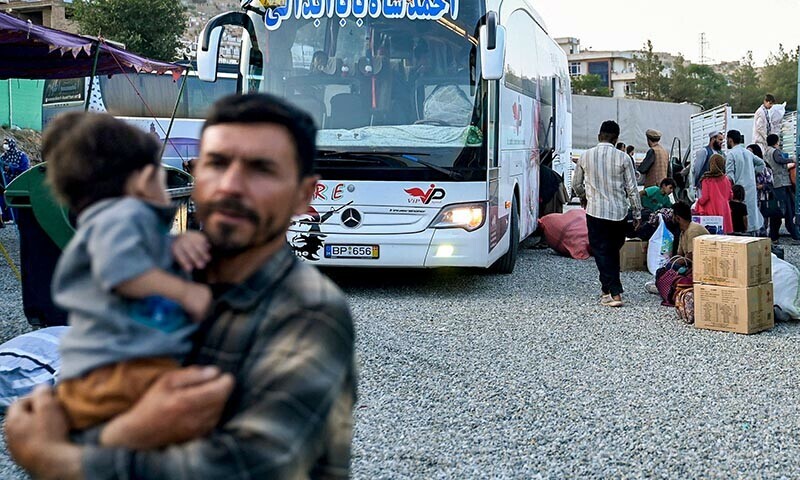


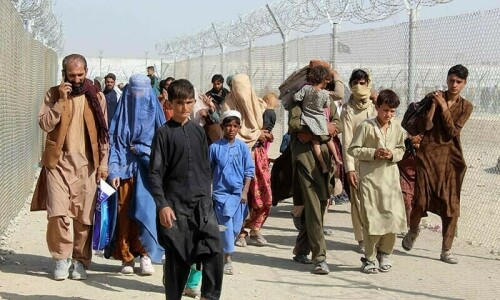
ISLAMABAD: The UN special representative for Afghanistan, Roza Otunbayeva, on Wednesday proposed a ‘prioritised’ regional dialogue with Pakistan, Iran and Central Asian states to halt the disorderly return of Afghans and uphold the principle of voluntary, dignified and safe repatriation.
The call comes as more than 1.3 million Afghans have returned to the country this year, straining communities where 70 percent of people live in poverty, the UN envoy said in a press statement.
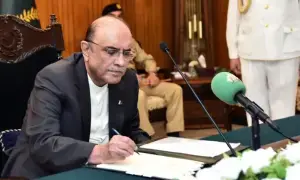
“Afghanistan’s stability hinges on shared responsibility,” Ms Otunbayeva said in the statement circulated by the United Nations Assistance Mission in Afghanistan (UNAMA).
“We cannot afford indifference; the cost of inaction will be measured in lives lost and conflicts reignited.”
Women and children face the gravest risks, returning not only to dire economic hardships but to a context where their access to basic services and social protections remains severely constrained, Ms Otunbayeva said.
“Do not turn away,” she appealed to donors, development partners and regional governments.
“The returnees must not be abandoned. What we are witnessing are the direct consequences of unmet global responsibilities. We must act now — with resources, with coordination, and with resolve.”
Ms Otunbayeva said the United Nations in Afghanistan is calling for an integrated approach that resources humanitarian needs while scaling up assistance in areas of return.
She underscored the need for immediate reintegration assistance, including livelihood programs and community infrastructure investments, to stabilise communities.
Without swift interventions, the UN warned that remittance losses, labour market pressures and cyclical migration could lead to destabilisation, renewed displacement and risks to regional stability.
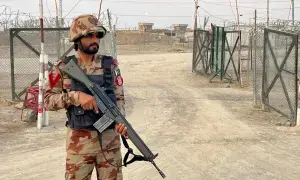
“What should be a positive homecoming moment for families who fled conflict decades ago is instead marked by exhaustion, trauma, and profound uncertainty,” she said after visiting the Islam Qala border crossing.
“The sheer volume of returns — many abrupt, many involuntary — should be setting off alarm bells across the global community.”
“It is a test of our collective humanity,” she added. “Afghanistan, already grappling with drought, and a chronic humanitarian crisis, cannot absorb this shock alone.”
Humanitarian operations remain dangerously underfunded, forcing agonising choices between food, shelter and safe passage, according to UNAMA.
Meanwhile, the UN Office for the Coordination of Humanitarian Assistance (UNOCHA), said in a recent report that the number of Afghans returning from Iran has increased significantly following the recent escalation in hostilities between Israel and Iran.
Approximately 167,000 Afghans returned from Iran between July 1 and July 5 alone.
The report noted that as political tensions and anti-Afghan sentiment rise, the profile of returnees has shifted, with families now comprising over 60 percent of those returning, in contrast to the predominantly single males of previous waves.
Published in Dawn, July 17th, 2025