Astronomers observe birth of a solar system for first time
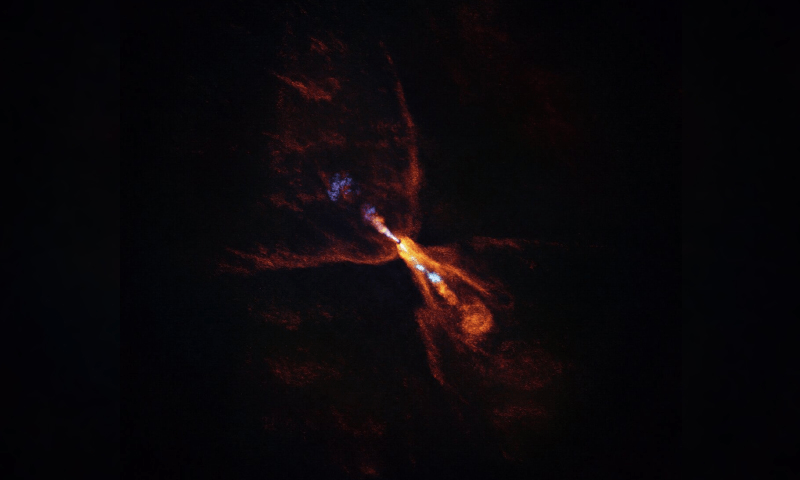


Astronomers said on Wednesday they had observed the moment when planets start forming around a distant star for the first time, revealing a process that sheds light on the birth of our own solar system.
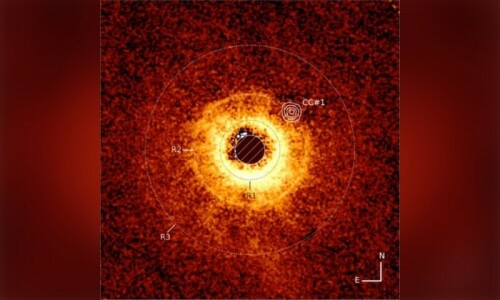
The new planetary system is forming around the baby star HOPS-315 — which resembles our own Sun in its youth — 1,300 light years from Earth in the Orion Nebula.
Young stars are surrounded by massive rings of gas and dust called protoplanetary discs, which is where planets form. Inside these swirling discs, crystalline minerals that contain the chemical silicon monoxide can clump together.
This process can snowball into kilometre-sized “planetesimals”, which one day grow into full planets.
In our home Solar System, the crystalline minerals that were the starter dough for Earth and Jupiter’s core are believed to have been trapped in ancient meteorites.
Now astronomers have spotted signs that suggest these hot minerals are starting to solidify in the disc surrounding HOPS-315, according to a new study in the journal Nature.
“For the first time, we have identified the earliest moment when planet formation is initiated around a star other than our Sun,” lead study author Melissa McClure of Leiden University in the Netherlands said in a statement.
The minerals around the star were first spotted by the James Webb Space Telescope. Then the astronomers used the European Southern Observatory’s Atacama Large Millimetre/submillimetre Array (ALMA) telescope in Chile to find out exactly where the chemical signals were coming from.
They discovered that these minerals are in a small portion of the disc, which is similar to the asteroid belt that surrounds our Sun.
This will allow scientists to watch the process that may have birthed our home planet.
“We’re seeing a system that looks like what our Solar System looked like when it was just beginning to form,” said study co-author Merel van’t Hoff of Purdue University in the US.