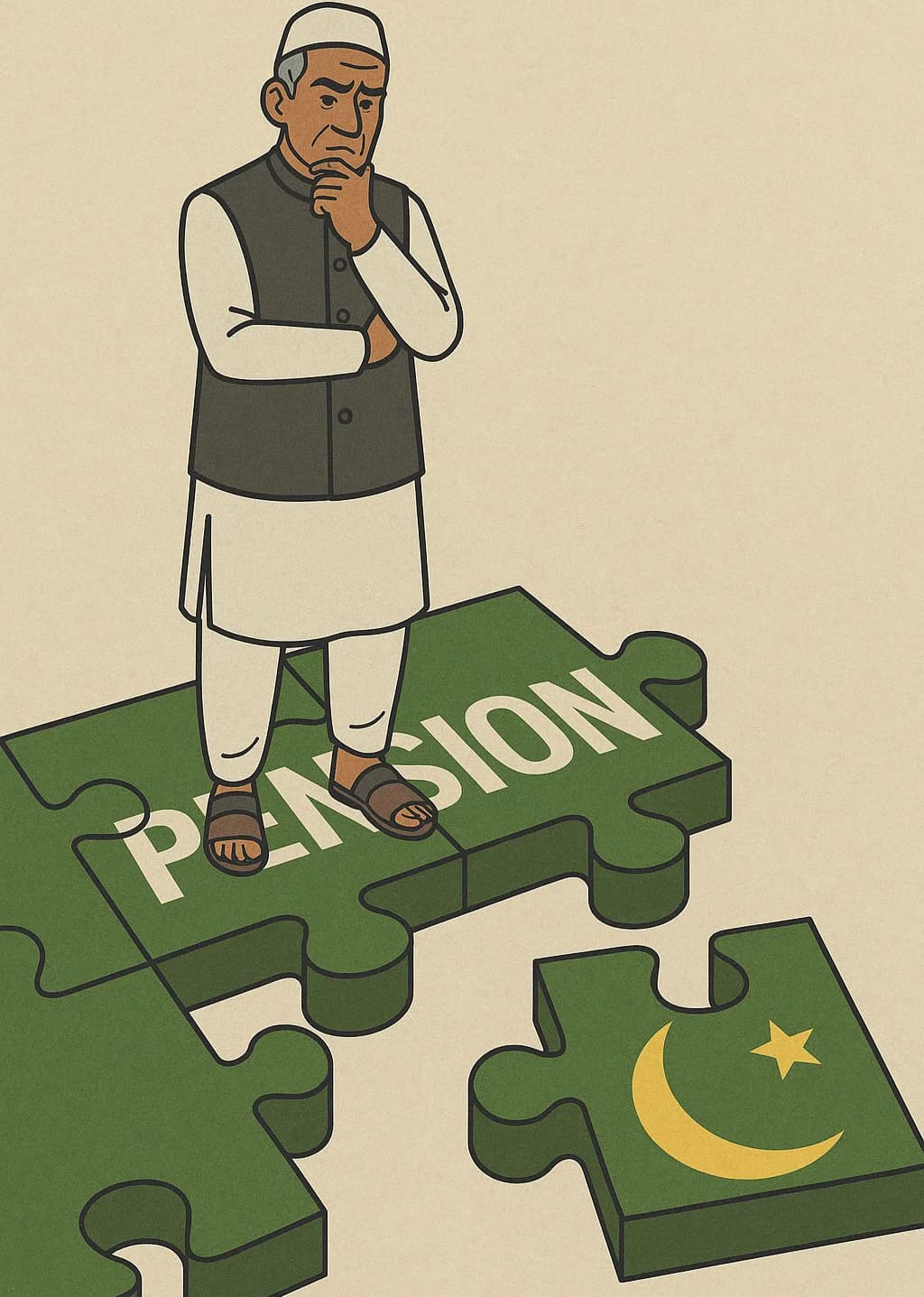
THIS is with reference to the letter ‘Pension policy’ (June 25), which rightly raised the critical issue of government’s plan to limit family pensions to 10 years after the death of a retired government employee. The matter of pension to retired government employees has really started cropping up frequently in national debates over the last few years. It may be justified administratively to reduce the financial burden on the government, but doing so appears morally and socially insensitive.
For many families, particularly widows and dependent daughters, this pension is the only reliable source of sustenance, and cutting it off after a fixed period raises a serious question about the state’s long-term commitment to the welfare of its former employees and their families.
Despite constitutional safeguards and repeated assurances from policymakers, the plight of workers in Pakistan remains deeply troubling.
Furthermore, the non-implementation of minimum wage laws by private indus-trial institutions is also putting welfare of labourers in jeopardy. According to recent disclosure made before the Public Accounts Committee (PAC), over 80 per cent of industrial units in Sindh have yet to implement the minimum wage law.
Many workers continue to toil long hours in factories, workshops and offices without the compensation they are legally entitled to. The absence of inspections, and a weak enforcement mechanism have together rendered the wage law almost meaningless for a majority of labourers. This failure is not just a legal lapse; this is social injustice.
Policymaking should never lose sight of the vulnerable. In a society striving for progress, justice for workers and the welfare of retired employees must not be negotiable. Let not the sweat of our workers and the tears of pensioners be forgotten. Our policies must be guided by justice, equality and human compassion.
Muhammad Salim
Islamabad
Published in Dawn, July 12th, 2025