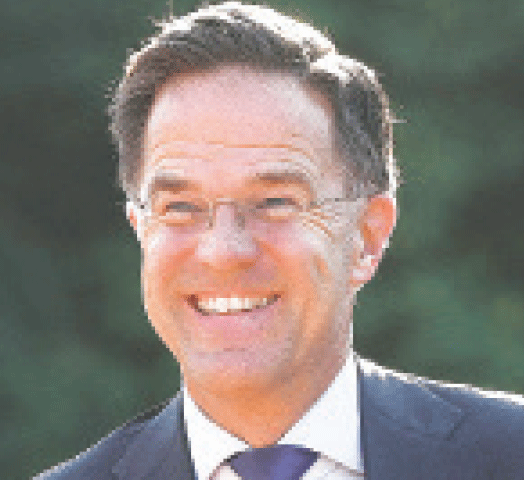
THE HAGUE: When former Dutch Prime Minister Mark Rutte took over as Nato chief last year his primary task was clear: keep Donald Trump on board should he come back to power.
Now as he hosts his first alliance summit as boss in his hometown The Hague, the veteran political operator seems on the verge of handing the volatile leader the kind of win he craves.
With a combination of diplomatic finessing and a large dose of flattery, Rutte aims to keep Trump happy with a carefully crafted deal that meets his demand for Nato allies to spend five percent of GDP on defence. “He’s been quite masterful in keeping the alliance together in a very difficult and sensitive period,” a senior Nato diplomat said. Rutte’s tour de force was cooking up a compromise on spending that allows Trump to claim victory by hitting his headline five-percent figure, while in reality setting the bar lower.
The agreement sees countries promise to spend 3.5 percent of GDP on core military spending, while the other 1.5 percent goes to a looser array of areas like infrastructure and cybersecurity.
In a fawning message sent to Trump before he headed to The Hague, Rutte aped the US president’s own style when he gushed that getting the deal was “something NO American president in decades could get done.” “Europe is going to pay in a BIG way, as they should, and it will be your win,” said Rutte.
Trump clearly liked the message as he posted it gleefully on his Truth Social feed.
Getting a successful outcome for Nato, the transatlantic alliance forged during the Cold War, was by no means a given when Trump stormed back into the White House threatening allies he would not protect them if they did not cough up.
As Washington berated Ukraine, cosied up to Russia and opened the door to pulling forces from Europe, it set alarm bells ringing over the future of an alliance founded on US might. Rutte’s strategy has seemed relatively simple: never criticise or contradict the notoriously sensitive former reality TV star.
Pain from Spain
When Trump suggested Ukraine caused Russia’s invasion: silence. When he yelled at Ukrainian President Volodymyr Zelensky in the Oval Office: no pushback. When he threatened not to protect allies: nothing to see here.
Instead, according to Rutte, Trump has been absolutely right to demand a quick end to the Ukraine war, has not called into question Nato’s mutual defence ethos, and has actually made the alliance stronger by forcing allies to spend more. All that courting appears to have paid off.
Diplomats say Rutte is one of only a handful of European leaders Trump willingly picks up the phone to. “Clearly the job is to keep the United States engaged as far as you can, even if it means that you have to sound a bit like Donald Trump occasionally,” said Jamie Shea, a former senior Nato official now with the Chatham House think tank.
Published in Dawn, June 25th, 2025