Govt signs $4.5bn loans with local banks to ease power sector debt



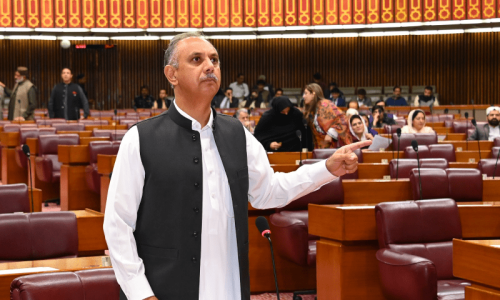
The government has signed term sheets with 18 commercial banks for a Rs1.275 trillion Islamic finance facility to help pay off the mounting debt in its power sector, Power Minister Awais Leghari said on Friday.
The government, which owns or controls much of the power infrastructure, is grappling with ballooning circular debt, unpaid bills and subsidies that have choked the sector and weighed on the economy.
The liquidity crunch has disrupted supply, discouraged investment and added to fiscal pressure, making it a key focus under the $7 billion IMF programme.
“Finding funds to plug the gap has been a persistent challenge, with limited fiscal space and high-cost legacy debt making resolution efforts more difficult. Eighteen commercial banks will provide these loans through Islamic financing,” Power Minister Awais Leghari told Reuters.
“It will be repaid in 24 quarterly instalments over six years.”
The facility, structured under Islamic principles, is secured at a concessional rate of three-month KIBOR minus 0.9 per cent — a formula agreed on by the IMF.
Leghari said it will not add to the public debt. Existing liabilities carry higher costs, including late payment surcharges on Independent Power Producers (IPPs) of up to KIBOR plus 4.5pc, and older loans ranging slightly above benchmark rates.
Meezan Bank, HBL, National Bank of Pakistan and UBL are among the banks participating in the deal, he said.
The government expects to allocate Rs323bn annually to repay the loan, capped at Rs1.938tr over six years.
The agreement also aligns with the government’s target of eliminating interest-based banking by 2028, with Islamic finance now comprising about a quarter of total banking assets.