BEIRUT: Human Rights Watch said on Sunday that migrant workers in the Gulf were at risk from extreme heat, urging countries to extend protections for labourers exposed to soaring temperatures.
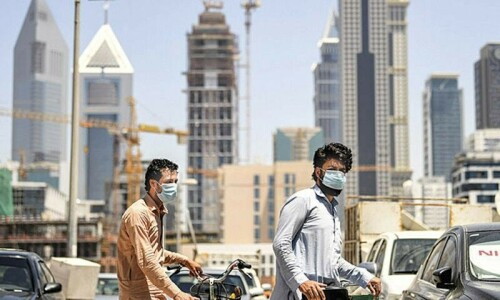
The United Arab Emirates, Saudi Arabia, Qatar and Kuwait, where migrants represent a sizable share of the workforce, lie in one of the planet’s hottest regions where summer temperatures often edge towards 50 degrees Celsius.
“Every summer reveals that the climate crisis aggravates the occupational health and safety catastrophe for the millions of migrant workers dangerously exposed to extreme heat,” said Michael Page, HRW’s deputy Middle East director.
“Because Gulf states are dragging their feet on evidence-based labour protections, migrant workers are unnecessarily dying, experiencing kidney failure, and suffering from other chronic illnesses,” he added.
The wealthy Gulf states rely heavily on millions of migrant workers, particularly in construction, the majority of whom hail from India and Pakistan. Last month, the UAE breached its May temperature record for the second day in a row, hitting 51.6 degrees Celsius.
To protect labourers, the states ban work under direct sunlight and in open-air areas at peak heat hours from mid-June until mid-September as part of a longstanding “midday break” policy.
But with the Gulf particularly vulnerable to climate change, HRW said “these extreme heat conditions are now more frequent and earlier, in May”, before the midday break comes into effect.
A electrician in Kuwait interviewed by the New York-based rights group said he would feel “dizziness, vomiting, head pain, and blurry vision many times,” working during the summer months and “many people fall down because of heat”.
HRW urged authorities and businesses to move away from “calendar-based midday bans,” to risk-based measures to gauge occupational heat stress.
Scientists have shown that recurring heatwaves are a clear marker of global warming and that these heatwaves are set to become more frequent, longer and more intense.
The number of extremely hot days has nearly doubled globally in the past three decades.
According to a 2024 report from the International Labour Organisation, a United Nations agency, outdoor workers in Arab states face some of the highest exposure to heat stress in the world, with 83.6 percent suffering from excessive heat exposure on the job.
Published in Dawn, June 2nd, 2025