Pakistan gets help for precision agri initiative


 0
0
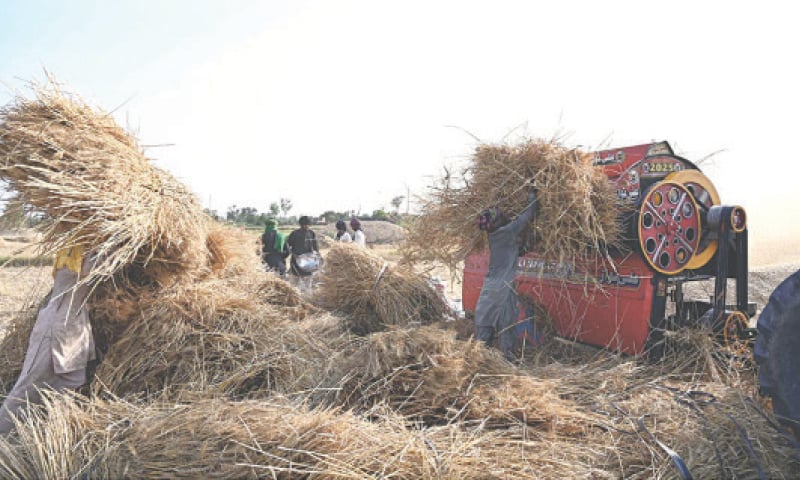

ISLAMABAD: The Green Climate Fund (GCF) will assist Pakistan in enhancing its capacity for precision agriculture by establishing a centralised knowledge management system at the University of Agriculture in Faisalabad.
This initiative aims to implement and promote precision agriculture practices that will contribute to climate resilience in Punjab and Gilgit-Baltistan.
Under the project, a comprehensive ‘Readiness Action Plan’ will be developed to enhance institutional capacities, address policy gaps, and promote climate-smart agriculture using precision tools.
Precision agriculture helps avoid unwanted practices in crop production by reducing labour, water, fertilization, and pesticides, thereby ensuring quality produce.
It recommends site-specific management interventions to maximize yield and reduce input costs, utilizing digital support systems.
Pakistan lacks a standardised framework or coherent strategy for promoting and implementing precision agriculture as a climate resilience measure.
The absence of institutional guidance leads to fragmented efforts, which limits the systematic adoption and scaling of precision agriculture solutions.
A major obstacle to the adoption of precision agriculture in Pakistan is the limited availability and accessibility of advanced agricultural technologies.
Many smallholder farmers lack access to essential tools, including remote sensing and satellite-based monitoring for real-time climate and soil analysis, automated irrigation systems for optimising water use in drought-prone areas, and smart sensors and drones for data-driven decision-making.
Pakistan faces significant climatic threats impacting agriculture, including increased frequency and intensity of extreme weather events like floods, droughts, and erratic monsoon rains.
The projected recession of glaciers threatens water inflows into the Indus River System, essential for irrigation. Rising temperatures and water stress in arid regions are expected to reduce agricultural productivity, while saline water intrusion in the Indus Delta will adversely affect coastal agriculture.
Precision agriculture offers a promising solution by optimising resource use and minimizing environmental impact through technologies like GPS-guided equipment, automated irrigation, and drones.
Published in Dawn, June 1st, 2025