HRCP calls for repeal of controversial Peca


ISLAMABAD: A report released by the Human Rights Commission of Pakistan (HRCP) on Thursday highlighted serious flaws in the Prevention of Electronic Crimes (Amendment) Act 2025 and called for the law to be repealed entirely, without accepting any coercive application of its iterations from 2016 to 2023.
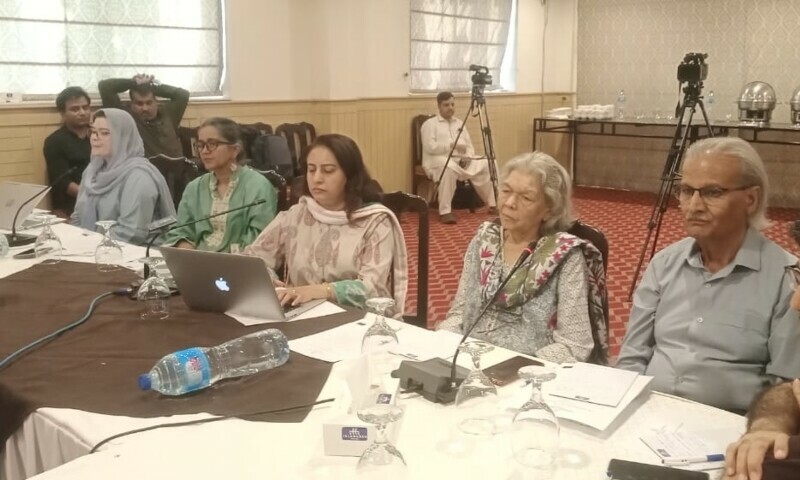
Produced under HRCP’s Legislation Watch Cell, the report’s findings were presented by digital rights activist Farieha Aziz at an advocacy meeting held as part of a European Union-funded project. Introducing the session, HRCP Director Farah Zia noted with alarm the recent wave of repressive laws, particularly those undermining civic spaces and being used to suppress dissent and freedom of expression.
Farieha Aziz, who authored the report, pointed out that Peca criminalised vague categories of “fake and false information,” carrying penalties of up to three years’ imprisonment. It also establishes a powerful regulatory authority, a complaints council and a tribunal — all subject to disproportionate executive control.
Additional concerns include the reclassification of previously bailable and non-cognisable offences into non-bailable and cognisable ones, thereby widening the scope for coercive action.
Commission’s report claims law contains serious flaws
Moreover, the National Cyber Crime Investigation Agency has replaced the Federal Investigation Authority, operating without adequate safeguards.
Speaking at the meeting, journalist Adnan Rehmat emphasised the state’s responsibility to protect individuals’ rights, according to a statement issued by the HRCP. He advocated for the decriminalisation of free speech and suggested engaging political parties through broad-based representation.
Journalist Saleem Shahid criticised Peca for allegedly violating constitutional rights to free speech and access to information. He urged journalists and civil society to form a united front to defend these freedoms.
Former BNP-M legislator Sanaullah Baloch underscored that freedom of expression is essential to a strong parliament.
HRCP Co-Chair Munizae Jahangir highlighted the issue of hyper-regulated connectivity in Balochistan and Gilgit-Baltistan, as well as the pressure faced by journalists operating in these regions and in Azad Kashmir.
In this context, journalist Asad Ali Toor shared his personal experience of discovering that his family’s bank accounts had been frozen — allegedly in connection with his work — a tactic Munizae Jahangir described as “economic terrorism”.
Digital rights activists Usama Khilji and Aftab Alam called for the formation of a national coalition of civil society members, journalists, and human rights defenders to engage political parties on the rapid escalation of curbs on freedom of expression and opinion.
Supporting the proposal, HRCP council member Farhatullah Babar stressed the need for countering disinformation while simultaneously protecting the broader rights to free speech and access to information.
Concluding the meeting, HRCP Islamabad Vice Chair Nasreen Azhar proposed that the coalition should identify all laws that conflict with constitutional guarantees of fundamental freedoms.
Published in Dawn, May 30th, 2025