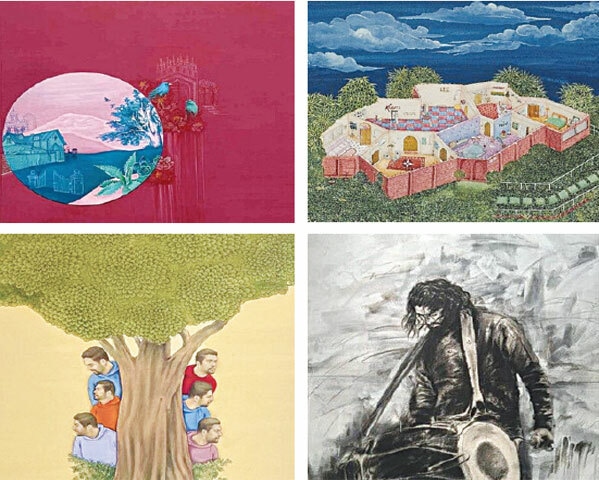
ISLAMABAD:A group exhibition titled ‘The Next Wave’ opened on Saturday at Gallery 6, showcasing 14 emerging artists — recent graduates from both Lahore and Rawalpindi campuses of the National College of Arts (NCA) — marking a bold chapter in contemporary art scene.
Curated by Dr Arjumand Faisel, the exhibition offers a compelling view into the emotional, social and political reflections of a new generation of artists.
“Each year, thesis exhibitions of NCA generate considerable excitement among critics, curators, collectors and art enthusiasts alike. They offer a first glimpse into the minds of emerging artists, revealing trends, techniques and thematic concerns that reflect both individual journeys and collective moods,” commented Dr Arjumand Faisel, the curator and noted artist.
“This year’s cohort has particularly captivated attention for its courage and compelling exploration of identity, memory, inner conflicts, displacement and environmental concerns,” he noted.
Most of the artists, while speaking with Dawn, expressed their belief in art as a means of reflecting life — subtly portraying societal contradictions. They described artists as deeply sensitive individuals, attuned to injustice and capable of profound empathy for the marginalised and oppressed.
Working across a range of media,from miniature painting and gouache to oxidized silver leaf, charcoal, and digital illustration,the artists explore themes rooted in personal experience while addressing broader societal contradictions.
Ms Yulia, a German diplomat, praised the artwork of emerging artists.
Seven of the participants specialise in miniature painting, reinterpreting tradition with contemporary sensibilities.
Aaila Zahra’s A World Within transforms her home into a visual archive using gouache on paper to explore memory, identity, and belonging.
Bakhtawar Naqvi reflects on the paradox of borders through ornate hashias, exploring how boundaries offer both sanctuary and restriction.
Fatima Maqbool draws on her journey from Abbottabad to urbancentresto create haunting cityscapes. In Safar and Neel Ka Safar, she fuses architecture with tea washes and gouache to evoke forgotten histories and emotional depth.
Bareera Sajid celebrates plant life through rhythmic, symmetrical gouache works, using nature’s cycles as metaphors for emotional transformation. Similarly, Khizra Tanvir weaves together Japanese aesthetics and miniature technique to explore nostalgia and relocation. Her piece Strawberry Lunchbox combines tangled roots and sentimental objects, examining belonging in a shifting world.
Maheen Elahi presents nightscapes in layered blues that blend reality with reverie, offering quiet meditations on solitude and serenity. Rameen Ahmed Rizvi draws on personal family histories, using animals and domestic motifs to tell stories of loss, memory, and womanhood.
Usama Ishaq’s work, such as All That I Am, uses repeated miniature figures to depict internal dialogue and psychological complexity, transforming miniature art into a space for deep introspection.
Swarim Abid Hasan’s silver leaf and oxidation-based paintings, like Blind to the Sun, reveal the poetry in decay and transformation. With a background in muralism, Hasan bridges fine art and public engagement, exploring time and resilience through experimental techniques.
Rafay Talpur’s minimalist prints use dot techniques to evoke madressah memories, blending vulnerability and survival into monochromatic works like Rainbow. Muqeet Haider captures human solitude in oil portraits, including What She Knows, highlighting empathy and internal stillness.
Umna Laraib, known for both her miniature work and curatorial practice, explores the emotional resonance of colour and landscape, using structured compositions to invite reflection. Mutaib Shah, a senior artist and educator from Chitral, combines Mughal miniatures with abstract urban scenes. His work, such as Security, critiques power, tradition, and identity.
Syeda Mehreen Fatima constructs domestic vignettes using photo transfer and collage, exposing the contradictions of home as both sanctuary and constraint.
Hijab Rizwan, a multidisciplinary artist, combines charcoal, drawing, and archival photography in A Tale of Two, reflecting on family memory and impermanence.
Rounding off the show is Zain Zahid, who infuses pop culture and satire into his art. His vibrant works, including Dhamaal and Maula Jutt, pay homage to Lollywood poster art while critiquing mass media and embracing nostalgia.
Together, these artists form a dynamic collective, challenging conventions and offering fresh perspectives through deeply personal and socially aware visual storytelling.The show will continue through May 30.
Published in Dawn, May 27th, 2025