IT appears that the ceasefire will hold, at least in the near term.
As Islamabad and New Delhi retreat cautiously from the precipice of a full-blown war, talks between senior military officials have continued to build on the groundwork laid by the Trump administration’s diplomatic intervention.
The most immediate relief is that the two sides seem to have acknowledged that, their respective political leadership’s statements notwithstanding, the break in hostilities does not have an ‘expiry date’ and will be adhered to without a recurring need for formal renewal.
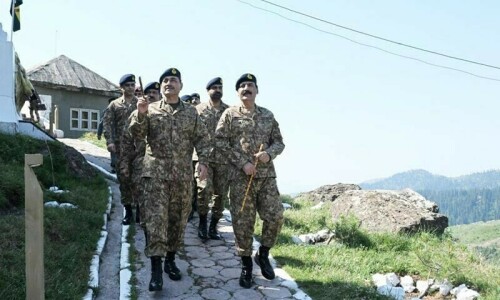
Meanwhile, the DGMOs in Pakistan and India are in touch to ensure that the ceasefire can be made more ‘sustainable’. The Foreign Office spokesperson has said they have maintained periodic contact and agreed to develop a structured mechanism for de-escalation. This will likely involve a phased reduction of forward deployments and regular troops along the international border, with the Pakistan Rangers and India’s Border Security Force soon resuming normal operations.
These are, of course, positive signs. A gradual return to normalcy will allow the two states to reflect on the recent crisis and, hopefully, find a mutually acceptable means to address its root causes so that the region does not find itself on the brink of nuclear conflict in the future. It will also provide the breathing space needed to dial down the rhetoric and refocus public attention on the bigger picture.
One hopes there is some realisation by India that the status quo is not in anybody’s strategic interests, and that continuing to stoke hostilities instead of removing the irritants from the equation will only create more difficulties over time — not only for the two states but also for the South Asian region. There is a strong incentive for not allowing the feelings of heightened acrimony to linger and to reinforce the military drawdown with some soft measures.
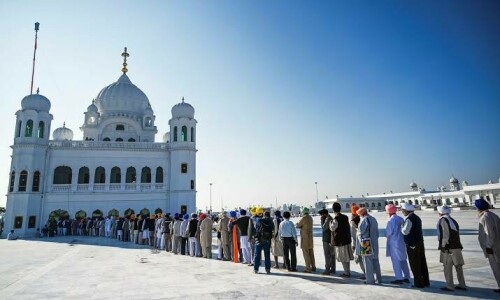
It has been encouraging to note that Afghan transit trade has resumed through the Wagah-Attari border. Sikh pilgrims, in particular, have been hoping that the thaw will lead to the reopening of the Kartarpur corridor, which New Delhi had closed, to allow Indian pilgrims access to the shrine of Guru Nanak in Pakistan.
While officialdom deliberates and talks, there is no reason for the people to be deprived of the benefits of trade and spiritual pilgrimages. Public feelings of animosity for the other, made particularly worse by recent events, should be carefully calibrated down if there is a commitment to finding durable solutions to the existing problems.
Allowing people-to-people contact can help immensely in this regard. Both countries have come very close to achieving a breakthrough on their issues in the past, and there is no reason that it cannot happen again. It may require a lot of hard work, but it is certainly not impossible.
Published in Dawn, May 20th, 2025