0
0

There are art exhibitions that resonate, and then there are those that strike a deeper, more unsettling chord — demanding not just reflection, but confrontation.
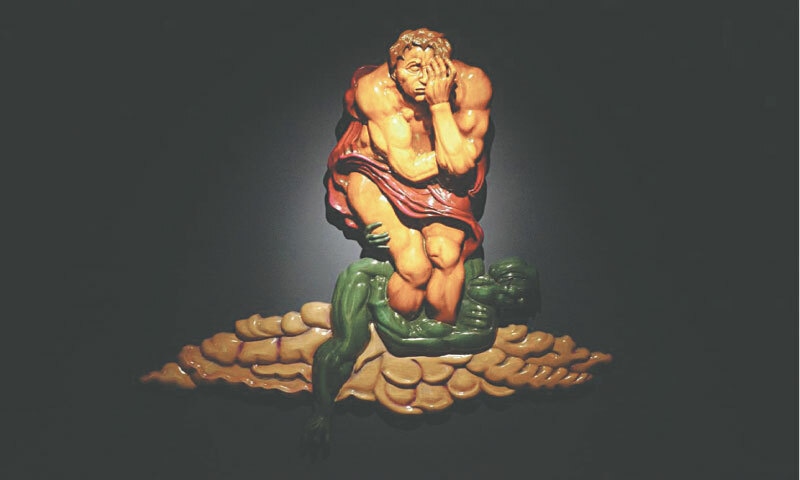
Adeela Suleman’s latest solo show, ‘The Kingdom of Retribution’, at Canvas Gallery, Karachi, achieves the latter. A searing meditation on morality, memory and the fragile boundaries between justice and complicity, the exhibition draws on the iconography of Michelangelo’s The Last Judgement to examine the contemporary human condition through a moral and philosophical lens.
At the heart of Suleman’s inquiry is the question of choice. What do we choose to see, to remember, to act upon — and what do we choose to ignore? Suleman, known for her piercing visual language and socio-political commentary, excavates these dilemmas through masterful woodcarvings that reference both the grandeur of Renaissance art and the quiet terror of modern-day apathy.
The exhibition’s conceptual and emotional foundation is anchored in sound. Sada-e-Mehshar: Raag Marwa, a musical composition in D Flat 9 by maestros Arshad Mahmud and Ustad Nafees Ahmed, fills the gallery with an almost otherworldly atmosphere.
The powerful social commentary that permeates much of Adeela Suleman’s art was once again on display at her latest exhibition, a meditation on morality, memory and the fragile boundaries between justice and complicity
Composed specifically for the exhibition, the piece deftly blends elements of South Asian classical music — surbahar, sitar, tanpura, tabla, pakhawaj and the garrha — with Western instruments such as the church organ, oboe, French horn, trumpet and orchestral strings. The resulting fusion is not mere aesthetic accompaniment — it is an aural invocation, echoing the call to judgement that the carved figures seem to respond to.
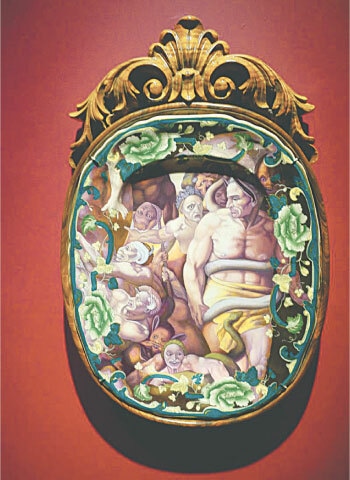
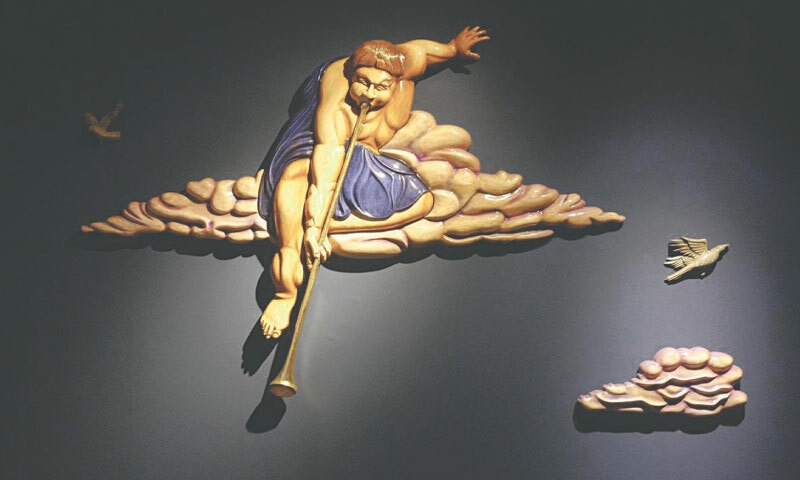
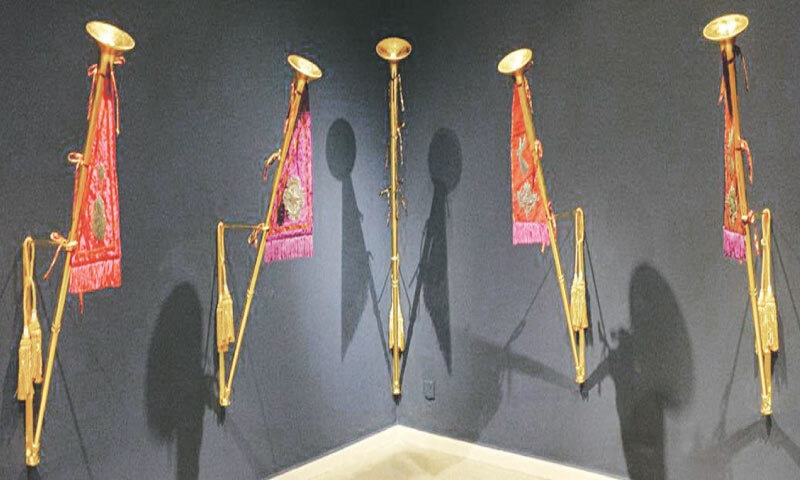
As the music weaves its plaintive spell, Suleman’s intricately carved rosewood panels emerge like sacred texts — each one a visual narrative charged with allegory and critique. Angels with trumpets, demons writhing, tormented souls suspended between salvation and damnation — these are not distant metaphysical figures but symbols of today’s realities. The show’s title makes it clear: this is a space where the consequences of human action — political, ethical, spiritual — are laid bare.
The formal beauty of the works is undeniable. Carved with the precision of a master craftsperson and the sensibility of a philosopher, Suleman’s reliefs evoke Mughal miniature traditions and priestly altarpieces in equal measure. But this beauty is not consolatory; it draws the viewer in only to confront them with questions that are difficult to escape.
In works such as The Book of Records, where an open ledger carved in wood evokes the meticulous documentation of history’s moral failures, Suleman asks: what histories do we preserve, and which ones do we erase?
According to Suleman, “In ‘[The Kingdom of] Retribution’, I navigate the timeless themes of judgement, redemption, and the troubled contours of the human condition... My carvings attempt to rejuvenate the visceral and evocative images that Michelangelo so masterfully created.” This rejuvenation, however, is not limited to visual homage — it is deeply rooted in a contemporary sensibility that sees retribution not as a final verdict from the heavens, but as an ongoing process, embedded in the structures of everyday life.
This is a through-line in Suleman’s practice. Her previous work, most notably The Killing Fields of Karachi, unveiled at the Karachi Biennale in 2019 and subsequently censored and vandalised, exposed the state-sanctioned violence of extrajudicial killings carried out by police officer Rao Anwar. By transforming numbers into visual forms — 444 fabricated encounters rendered as tombstones — Suleman made grief visible, and therefore political.
That work was violently shut down not just because it exposed a brutal truth, but because it dared to memorialise it in public. “When you show 444 in such a big place, then it seems like a huge number. That’s what terrified them,” Suleman explained. “The moment you make a visual out of it, they lose their minds.”
It is this same fearlessness — this insistence on visibility — that permeates ‘The Kingdom of Retribution.’ By invoking Michelangelo, Suleman places herself in dialogue with an artist who, centuries ago, also grappled with sin, grace and the weight of Divine accountability. But where Michelangelo’s vision was largely theological, Suleman’s is moral and civic. Her infernos are not abstract — they are familiar. Her angels do not rescue — they awaken.
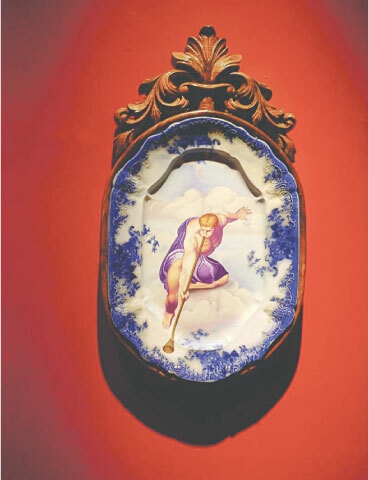
The show also offers a rare moment of spiritual contemplation in a city fractured by violence, political fatigue and moral confusion. ‘The Kingdom of Retribution’ becomes a space of reckoning — not just with the grand narratives of justice and punishment, but with the intimate, everyday choices that shape our collective ethos. Through sculptures such as The Clarion Call, Suleman blurs the boundary between spiritual awakening and civic responsibility. The trumpet blast here is not a call to rapture, but a demand for accountability.
And yet, the exhibition is not entirely without grace. There is a solemn beauty in the compositions, a sense of stillness that invites viewers to sit with discomfort rather than escape it. Suleman doesn’t offer easy answers. What she offers is something more valuable: a moment to pause, to reconsider, to re-examine our place in a world teetering on the edge of moral amnesia.
In this way, ‘The Kingdom of Retribution’ becomes more than an exhibition — it becomes a philosophical inquiry, a call to moral arms and a spiritual lamentation. It is rare to find an artist who so seamlessly blends the personal with the political, the aesthetic with the ethical. Suleman does this not through spectacle, but through the slow burn of craft, symbolism and layered meaning.
This exhibition deserves not just to be seen but to be experienced. Because this is not just art — it is the afterlife.
‘The Kingdom of Retribution’ was on display at Canvas Gallery in Karachi from March 18-April 3, 2025
Rumana Husain is a writer, artist and educator. She is the author of two coffee-table books on Karachi, and has authored and illustrated 90 children’s books
Published in Dawn, EOS, May 4th, 2025