ISLAMABAD: With the threat of steep new US tariffs looming over Pakistan’s textile sector, two federal ministers have pledged to raise exporters’ concerns at the highest level, seeking urgent revisions to the export finance scheme and tax policies to help Pakistani businesses remain competitive in the international market.
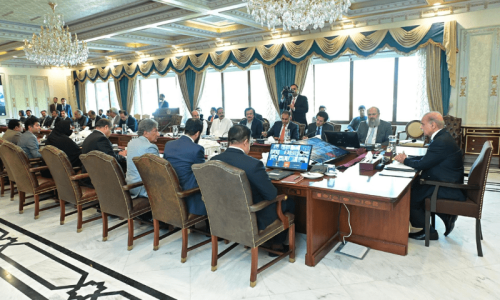
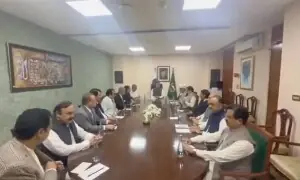
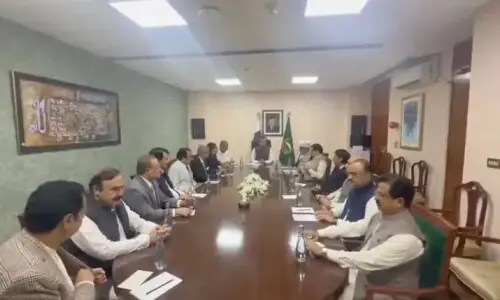
Planning Minister Ahsan Iqbal and Defence Minister Khawaja Asif made the commitments at a high-level exporters’ convention hosted by the Pakistan Readymade Garments Manufacturers and Exporters Association (PRGMEA). The event brought together representatives from various bodies, including PHMA, PSGMEA, PGMEA, SIMAP, PLGMEA and the Sialkot Chamber of Commerce and Industry (SCCI).
Mr Iqbal acknowledged that Pakistan’s exports, currently valued at around $33 billion, lag behind regional competitors like Bangladesh, India and Vietnam.
“We need a unified, export-led growth strategy,” he said, calling on dynamic cities like Sialkot to lead the charge with their entrepreneurial spirit and globally recognised products.
Ahsan Iqbal stresses need for unified, export-led growth strategy
He emphasised that economic recovery depends on creating a stable, business-friendly environment and reducing the cost of doing business.
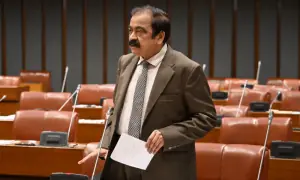
Defence Minister Khawaja Asif assured the participants that Sialkot exporters’ concerns would be prioritised. He warned that abrupt policy shifts and rising tax burdens are undermining productivity.
“Sialkot’s SMEs (small and medium enterprises) form the backbone of Pakistan’s export economy. We will not allow them to collapse under bureaucratic pressure,” he said. He also assured that outstanding refund claims and tax-related issues would be addressed at the highest levels to ensure a more supportive environment for exporters.
Former PRGMEA central chairman Ijaz A. Khokhar voiced strong reservations over recent amendments to the Export Facilitation Scheme (EFS), particularly those impacting temporary imports for re-export.
He cautioned that reduced utilisation periods and new bank guarantee requirements disproportionately harm SMEs, which already operate on tight margins. “Such policy shifts jeopardise not only our competitiveness but the very foundation of Pakistan’s export engine,” he warned.
Executive Member Ansar Aziz underlined the urgent need for targeted SME support mechanisms and access to low-cost financing to help exporters weather rising economic pressures. “Our SMEs are the lifeblood of innovation and job creation. Without tangible support, we risk losing this backbone,” he said.
Former PRGMEA chairman Sohail A. Sheikh criticised the abrupt move from the Final Tax Regime (FTR) to the Normal Tax Regime (NTR), saying the change has introduced unpredictability in tax liabilities and increased compliance burdens.
“This transition was implemented without stakeholder consultation. It has shaken industry confidence and harmed planning and cash flow certainty,” he said.
Published in Dawn, April 25th, 2025