ISLAMABAD: Amid growing concerns among senior judges of the Islamabad High Court over the shifting of cases between benches, an IHC judge has issued a judicial verdict reinforcing the authority of the chief justice to assign and reassign cases.
Recently, Justice Sardar Ejaz Ishaq Khan of the IHC questioned the transfer of a case related to the visitation rights of former prime minister Imran Khan.
Subsequently, Justice Babar Sattar issued a critical note after the chief justice reassigned to him a case from which he had earlier recused himself. Senior puisne judge Justice Mohsin Akhtar Kayani also issued an 11-page order challenging the chief justice’s authority to transfer all blasphemy-related petitions to a division bench.
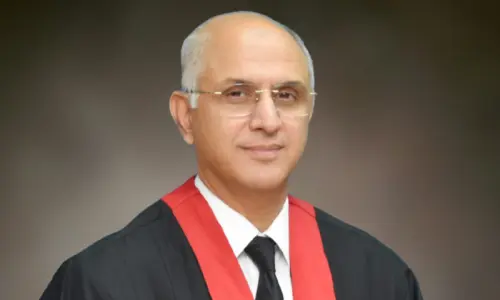
In contrast, Justice Raja Inaam Ameen Minhas of the IHC delivered a reported judgement affirming the administrative supremacy of the chief justice. In his ruling, Justice Minhas dismissed a petition seeking the transfer of a case between benches, declaring such requests “inherently non-maintainable” under constitutional and procedural law.
Justice Minhas dismisses petition seeking transfer of case to Justice Sattar
The judgement reinforced the CJ’s exclusive role as the “Master of the Roster” and highlighted the judiciary’s structural safeguards against forum shopping.
“A litigant’s right is to approach the court, not to choose their judge. The latter is a privilege reserved to the Master of the Roster alone,” the judgement stated.
The matter arose from a petition filed by Mudassir Malik, who sought to have his case transferred to Justice Babar Sattar, where a related petition — concerning alleged irregularities in a government appointment process — was already pending.
His counsel, Advocate Muhammad Umer Khan Vardag, argued that consolidating the cases before a single bench was essential to uphold “judicial comity” and to avoid conflicting rulings, particularly as the respondent was allegedly attempting to circumvent a stay order issued in the earlier petition.
The IHC registrar initially objected to the transfer request, questioning its legal foundation. The matter was subsequently referred to Justice Minhas’s bench as an “objection case”.
In a detailed 19-page order, Justice Minhas methodically refuted the petitioner’s arguments, grounding his reasoning in constitutional provisions, procedural rules, and binding judicial precedents.
The judgement cited Article 202 of the Constitution, which empowers high courts to frame rules governing their own practice and procedure. According to the Islamabad High Court Rules, the chief justice alone holds the authority to constitute benches and allocate cases.
Reaffirming the “Master of the Roster” doctrine, the verdict emphasised the chief justice’s role as the “exclusive conduit” for assigning cases. It cited the Supreme Court ruling in the Muhammad Wasay Tareen vs. Chief Justice of Balochistan case, which held that litigants have no right to demand adjudication before a specific bench.
Pakistani precedents, such as Ms. Benazir Bhutto vs. The President of Pakistan, were cited to dismiss indirect challenges to judicial impartiality disguised as procedural transfer requests.
Justice Minhas cautioned that such petitions, even when carefully framed, implicitly question the fairness or competence of the presiding judge. “Such applications, however artfully worded, imply a veiled objection to the judge. This undermines judicial discipline and the sanctity of bench assignments,” he wrote.
The ruling clarified that the allocation of benches is an administrative act, not a judicial one, and that judges exercise jurisdiction only after a case has been formally entrusted to them by the chief justice.
“The chief justice’s prerogative to constitute benches is not a mere tradition but a constitutional necessity. To dilute this power would invite chaos and erode public confidence in the judiciary,” the judgement concluded.
The objection case has now been merged with the main writ petition, which will proceed before its originally assigned bench.
Published in Dawn, April 23rd, 2025