0
0


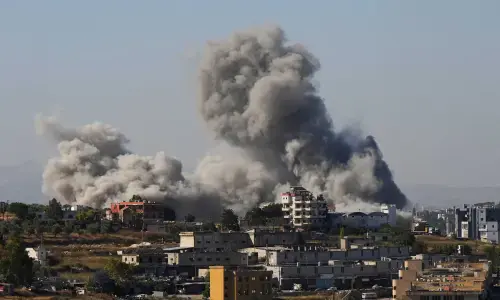
IN the wake of protest marches by groups of people in Balochistan, some Indian media outlets continue to paint a doomsday civil war scenario in the province. True, there is some degree of discontent in Balochistan, and some sabotage and terrorist activities take place from time to time by banned terrorist groups.
But it is an open secret that these acts of terrorism are largely supported by India and other hostile foreign powers that do not want a stable Pakistan.
It is true that successive governments have not been able to redress the grievances of the people in Balochistan, but other ground realities are hugely overlooked by the Baloch leadership and mainstream opposition parties.
Balochistan is a vast landmass where majority of human settlements are situated far apart, separated by difficult and mountainous terrains. This makes it an uphill task for any government to provide facilities, like natural gas, electricity, education and healthcare, to the people living in remote areas that are often unreachable.
Furthermore, there is lack of skilled local workforce, and whenever skilled people from Punjab and other provinces go there to work on development projects, the militants target them.
The engineers from our all-weather friend China are also targeted by these terrorist groups. It is understandable that India, along with other hostile foreign forces, would continue efforts to destabilise Balochistan, and ultimately Pakistan. But why should our own people encourage terrorists in the name of so-called nationalism?
It is a fact that the majority of tribal leaders become patriotic and federalists when they happen to be in power, but, once out of power, they incite the local people against the central government.
This, of course, they do for their own financial interests. They want their share in power, which they sometimes do not get. This irritates them.
They are not bothered at all about the lack of facilities, or the sense of depri-vation and marginalisation among their own people. How can all Baloch leaders be ‘accommodated’ or made chief ministers?
These tribal chiefs keep personal armies of thousands of militants and even have private jails for the very people they apparently raise their voices for. They live luxurious lives. Has any of them estab- lished a school or health facility for those very people?
It is clear that Baloch tribal chiefs just do not want their people’s plight to end through education, employment and development because the majority of the chieftains thrive on exploitation, and they unabashedly exploit the vulnerability and backwardness of the Baloch.
It is time the mainstream and regional political leadership rose above their party and personal interests, and called a spade a spade.
This they would do only when they are serious about resolving the major issues related to Balochistan, and only then the process of development and empower-ment of Balochistan would take place in realistic terms.
And, when that happens, the country’s enemies would not find a conducive environment for sponsoring terrorist acts because they would fail to find a reason to instigate any propaganda against the state of Pakistan.
But the big question is: will those who are supposed to do this ever prioritise their people’s welfare instead of their own vested and rather narrow financial interests? That remains to be answered.
Gulsher Panhwer
Johi
Published in Dawn, April 21st, 2025