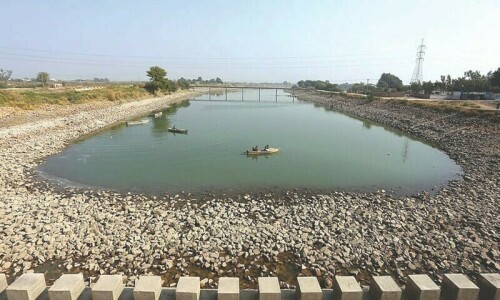
ANOTHER round of climate-induced misery is upon us. The Met Office predicted last Friday that this week would be a sweltering one, with a heatwave sweeping over the country till the coming weekend. It said that a high-pressure system was likely to grip the upper atmosphere from Sunday, triggering heatwave conditions in most parts of the country, which would get more severe in the southern half from April 14. It expected daytime temperatures to remain 6°C to 8°C above normal in Sindh, southern Punjab and Balochistan from Monday to Friday. Meanwhile, the upper half of the country would stew in temperatures four to six degrees higher than usual. Hot nights, dust storms and windstorms also featured in the forecast. It made for a rather sobering prognosis, with an acute shortage of water in the Tarbela and Mangla dams adding to the worries.
Large parts of Pakistan’s key agricultural regions have already been facing drought-like conditions, with rainfall drastically below average in the first quarter of 2025. Now adding to that is the extreme heat, which will create major problems for farmers.
These unnatural climate conditions are a sign of how fast the reality is changing for Pakistan, where policymakers still do not appear to be acting very decisively to protect the people and secure their future. While competing claims are being made on its already stressed water resources, the larger picture points to the fact that a much broader and more cohesive plan is needed to meet Pakistan’s changing requirements amidst an accelerating climate crisis. Yet, we continue to rely on band-aid measures.
Consider the Met Office’s warning to farmers. Based on its prediction, it advised agriculturalists to manage their activities keeping in view weather conditions and to protect their livestock during the heatwave. But such warnings serve no long-term purpose. Given the recurrence of freak weather patterns, perhaps what is needed is continuing farmer re-education and training programmes aimed at climate adaptation. Pakistan must confront the fact that the farm practices in vogue in large parts of the country may have been rendered outdated by climate change. It must move quickly to find ways to mitigate the climate’s effects on national output.
Likewise, the issue of water scarcity needs urgent attention. Both climate scientists and experts have long warned that Pakistan cannot continue wasting this vital resource and treating it as if it will stay constant. With reservoirs depleted to critical levels, Pakistan remains at the mercy of nature. An extended drought could trigger disaster in the coming months. There is, therefore, an urgent need to educate the public about water conservation and impress upon it the seriousness of the situation. This is an existential crisis and should be treated as such.
Published in Dawn, April 14th, 2025