Pakistan, Iran agree to keep border crossings open round the clock to boost trade
Pakistan and Iran on Wednesday agreed to further expand trade ties by keeping border crossings open round the clock, improving logistics and harmonising customs procedures.
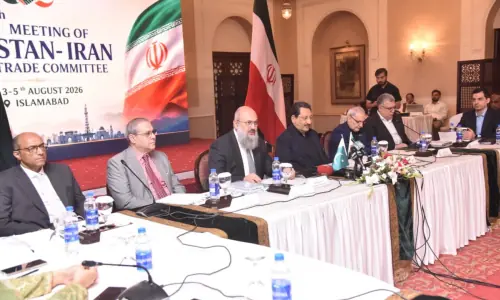
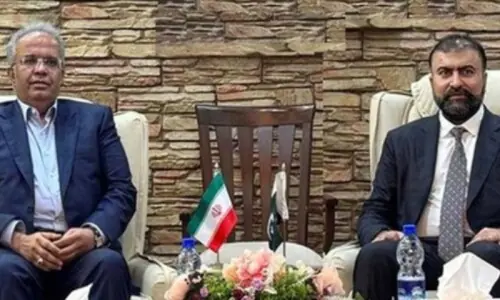
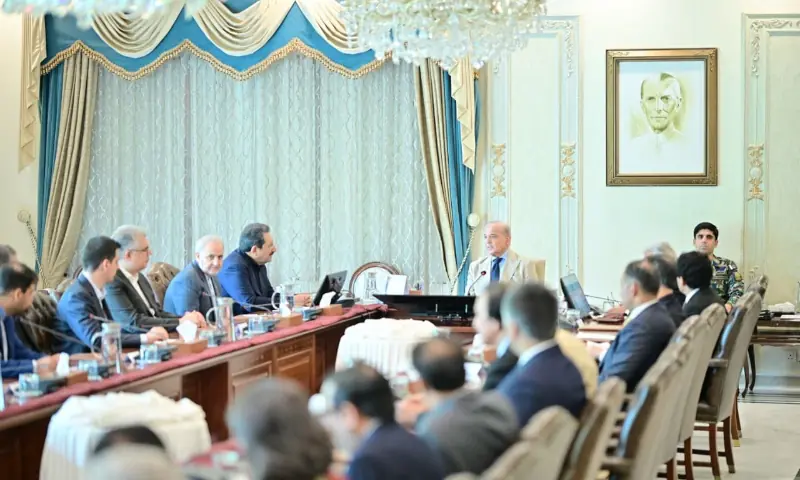
The development came during a meeting between Prime Minister Shehbaz Sharif and a six-member Iranian delegation, led by Iran’s Minister for Industry, Mine and Trade Mohammad Atabak, in Islamabad, according to a statement issued by the Prime Minister’s Office (PMO).
During the meeting, the prime minister said that Pakistan highly valued its relations with its close, brotherly neighbour Iran, the PMO said.
“Pakistan will continue its sincere efforts for peace in the region,” PM Shehbaz was quoted as saying.
He added that he had recently held a productive discussion with Iranian President Dr Masoud Pezeshkian on establishing lasting peace in the region and further enhancing Pakistan-Iran bilateral relations, particularly in trade, the statement said.
During the meeting, the prime minister expressed hope that sustained efforts would enable both countries to achieve the bilateral trade target of $10 billion set by their leadership, it added.
“Both countries will benefit from increased trade, particularly in food, agricultural commodities and related products,” PM Shehbaz said.
According to the statement, the meeting also agreed to promote border trade between Pakistan and Iran by expanding facilities to keep border crossings open 24 hours a day.
“Both sides also agreed to enhance cooperation in the mining sector, particularly in the processing and value addition of precious stones,” it stated.
The Iranian minister said he was grateful to Pakistan for the warm welcome and excellent hospitality.
He praised the Pakistani leadership and people for their “sincere diplomatic efforts for regional peace and their expression of solidarity with Iran,” the statement said.
“Iran is keen to further expand its economic and trade relations with Pakistan,” Atabak was quoted as saying.
“Technical-level negotiations on a Free Trade Agreement (FTA) between Pakistan and Iran are currently underway,” he added.
On Tuesday, both countries also reiterated their resolve to expand bilateral trade to $10 billion.
In April, Pakistan’s commerce ministry had notified six transit routes for the transportation of goods to Iran via Pakistani sea ports in Gwadar and Karachi. The development had come amid reports that thousands of containers destined for Iran are awaiting clearance at Pakistani ports.
Since March this year, both countries have rolled out a series of measures to facilitate border trade, including easing customs procedures, formalising Taftan as a customs station, and notifying new transit routes, against the backdrop of the ongoing US-Iran conflict in the Middle East that has strained economies in the region and beyond.