0
0

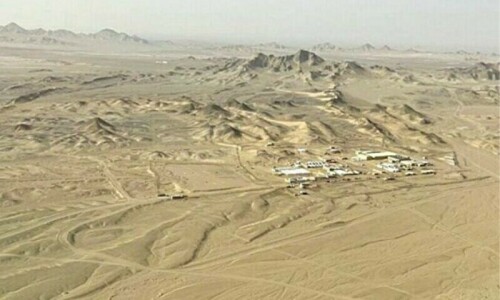
The World Bank’s private investment arm, International Finance Corporation (IFC), will provide $300 million in debt financing for the Reko Diq copper-gold mining project, an IFC disclosure said on Wednesday.
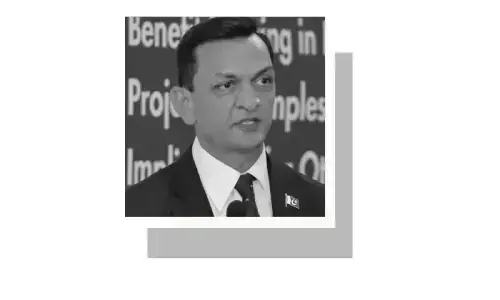
Barrick Gold’s copper and gold project intends to lock in upwards of $2 billion in financing from international lenders, with term sheets signed by early Q3, its project director for the mine told Reuters on Tuesday.
The funding will support the development of the Reko Diq mine, one of the world’s largest underdeveloped copper-gold deposits, which is hoped to generate $70bn in free cash flow and $90bn in operating cash flow.
Barrick Gold and the federal and Balochistan governments own the project jointly. The financing for phase one of the project, which is expected to start production in 2028, is being discussed with multiple lenders.
In an interview with Reuters at the Minerals Investment Forum 2025, Reko Diq’s Project Director Tim Cribb said the mine was looking at $650m from the IFC and International Development Association.
Cribb added that the mine was also in talks with the US Export-Import Bank for $500m-$1bn in financing, as well as $500m from development finance institutions, including the Asian Development Bank, Export Development Canada and Japan Bank for International Cooperation.
“We expect to close the term sheet in either late Q2 or early Q3,” said Cribb.
He said railway financing talks were underway with the IFC and other lenders, with infrastructure costs estimated at $500-800m, with roughly $350m as the initial cost.
A recent feasibility study has upgraded the project’s scope, with phase one throughput increasing to 45m tonnes per annum from 40m, and phase two throughput rising to 90m tonnes per annum from 80m.
The mine life has been revised from 42 years to 37 years due to the rising throughput, although the company believes unaccounted-for minerals could extend the life to 80 years.
The cost of phase one has also been revised upwards to $5.6bn from $4bn.
The World Bank plans to invest $2bn annually in Pakistan’s infrastructure over the next decade.
The lenders are expected to secure offtake agreements with potential clients, including countries in Asia such as Japan and Korea, as well as European nations like Sweden and Germany, which are looking to secure copper supplies for their industries, Cribb said.