0
0

ISLAMABAD: A new World Bank report says three out of four people in low- and middle-income countries now live in households that either benefit from social protection transfers or have access to social protection through contributions.
Over the past decade, low- and middle-income countries have expanded social protection to cover a record 4.7 billion people, accomplishing that has been no easy feat, however, despite the record increases in coverage, 1.6bn people in low- and middle-income countries still have no access to social protection, reveals the ‘State of Social Protection Report 2025’ released by the World Bank on Monday.
Extending the shield of social protection to cover the two billion people who are either lacking coverage or inadequately covered will undoubtedly require increasing the financing envelope, particularly in poorer countries, via either increased domestic revenues or external financing. This implies that social protection financing needs are central to fiscal policy reforms, it says.
For an additional 400 million people, the benefits these programmes provide are so meagre that they may not help recipients escape poverty or cushion the blow of unexpected shocks, protracted political and socioeconomic crises, or long-term economic and life cycle transitions.
Many households bear disproportionate burden that prevents them from escaping poverty, weathering crises and managing uncertainties of fast-changing world
The report estimated that despite significant progress, access to social protection remains an aspiration rather than a reality for far too many people, and at current growth rate, it will take 18 years for those living in extreme poverty to be fully covered by social protection programmes and another 20 years for the poorest 20pc of households in low- and middle-income countries to be covered.
The situation is particularly dire in low-income countries where despite substantial increases in coverage, social protection systems reach only one in four people, on average. Even in lower middle-income countries, social protection systems fail to reach more than half the population, the report warns.
Challenges
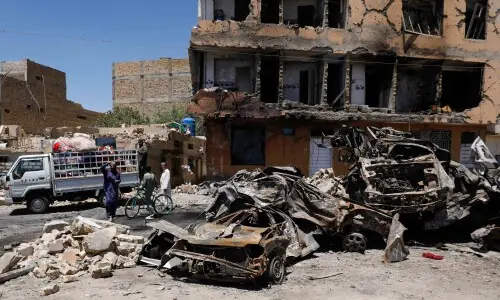
These unreached households, often among the poorest, bear a disproportionate burden of constraints that prevent them from escaping poverty, weathering shocks and crises, and managing the uncertainties of a fast-changing world. Many of these households live in fragile, conflict-affected locations or hunger hot spots that are concentrated in parts of the Middle East, Sub-Saharan Africa and South Asia.
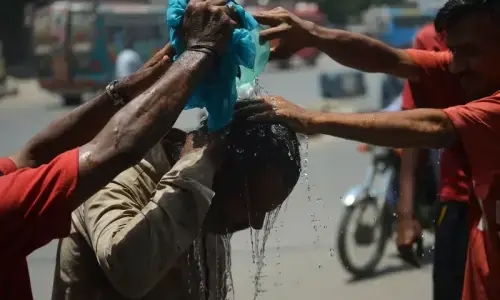
Disasters, shocks and protracted crises make poor people poorer and can plunge better-off households into poverty. People also need support during life and economic transitions that affect their livelihoods, such as aging, digitalisation, and the green transition.
In the face of increasingly frequent shocks, crises, and transitions, governments are turning to their social protection systems to respond to local events and global changes by boosting households’ resilience and delivering more timely and tailored support to affected households.
Dire need to invest
The time for investing in more and better social protection is now. Strong global headwinds from climate change, food insecurity, conflict and displacement challenges are picking up force, driving up levels of poverty and vulnerability and heightening demand for social protection and labour market programmes.
Emerging global trends are also affecting the demand for and composition of social protection services. Major population shifts are under way, manifesting themselves in the form of a youth bulge in some countries, rapid aging in many others, and internal and international migration along many corridors. Moreover, digital technologies, the changing nature of work, and the need for an accelerated green transition are leading to profound changes in employment that will require major investments in labour market programmes.
Published in Dawn, April 9th, 2025