GARDENING: PANSIES IN THE GARDEN
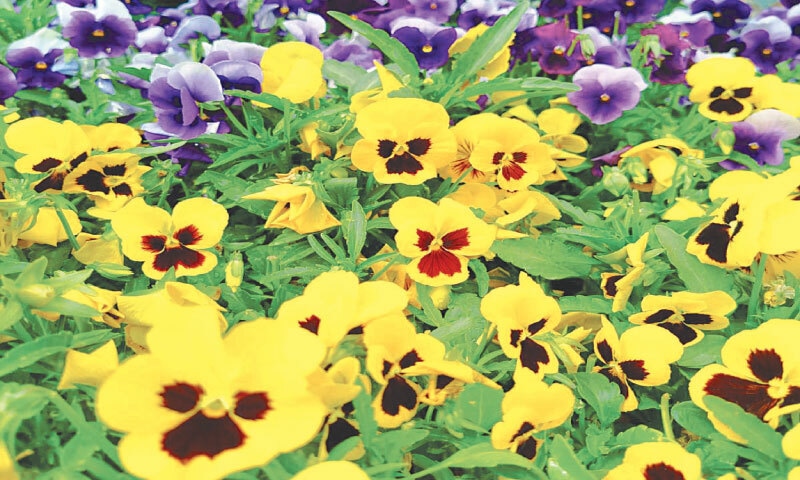
One drawback of being an anthophile is that one can never get enough of flowers. Some of the most beautiful flowers that continue to charm growers and onlookers with their array of colours are, sadly, seasonal. For a flower lover, it is always a test of patience to wait for about eight to nine months to start growing and appreciating the beauty and charm of his/her/their favourite flower!
Flowers such as zinnia, petunia, roses, marigolds, phlox, carnations, tulips, antirrhinum (snapdragons) and chrysanthemums — with their varying colour, shape and fragrance — are distinctly divided into two opposite seasons of the year. So, as gardeners bid farewell to certain flowers as their season ends, they are replaced by flowers of the other season.
One such flower is pansy, also known as violet or viola, which is relatively less-talked about as compared to other flowers. It neither boasts a massive plant, nor scented petals. It belongs to the family Violaceae, and it is believed that hundreds of species of pansies exist, most of them hybrids.
The garden pansy is regularly grown in pots and flower beds, and as a garden border. It is a hybrid flower itself (Viola x wittrockiana), which has its roots in wild pansy and other species of pansies. The name is believed to have been derived from the French word pensée, which means ‘thought’ and hence, pansy is tagged as a flower of remembrance!
The pansy plant can benefit from indoor sowing and germination in areas where the summers are long and hot and the winters short…
It is one of the oldest flowers being grown, and somewhat also resembles a human face due to its unique petal pattern and colour distribution. Therefore, it’s sometimes referred to as the smiley-face flower. This historical flower has many other interesting names, such as stepmother’s flower, heart’s ease, love-in-idleness, ladies delight and Johnny-jump-up.
Of course, each name has its own intriguing and interesting story. For instance, one can come across stories from Roman mythologies and Shakespeare’s plays involving Cupid’s arrow striking a flower and causing love at first sight.
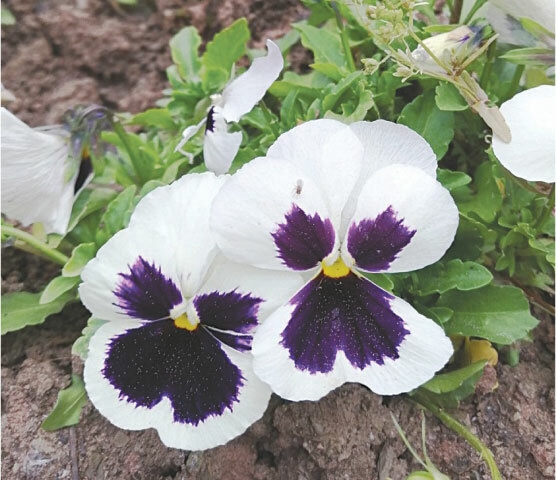
In various European traditions — including those of Germany, Scotland and Scandinavia — the pansy is referred to as the “stepmother flower.” This name is linked to a folktale illustrating family dynamics, often shared with children while using the flower’s structure to symbolise the story’s characters. In the German rendition, the pansy’s lower petal represents the stepmother, seated prominently; the two upper petals represent her daughters, positioned besides her; and the two smaller side petals represent the stepdaughters, placed at the periphery. This arrangement serves as a visual metaphor for the relationships and perceived favouritism within a blended family.
The next column will discuss how one can easily grow the beautiful garden pansy flower at home. But before that, let’s have a brief overview of the physical attributes of the pansy seeds. Although tiny, pansy seeds are relatively longer and oval in shape. They are light-weight and usually brown to black in colour.
The best time to sow the seeds is at the end of the summer or the beginning of the winter season. In Karachi-like climates, one can sow pansy seeds, ideally, during the months of October to November, and a couple of months earlier in the colder cities of the Khyber-Pakhtunkhwa province.

One of the reasons why winter season flowers do not thrive easily in Karachi is because of the long hot summers and shorter window of cold months. This results in less time being available for seeds to germinate, turn into a plant and start blossoming.
One option for cities with such temperatures is to sow and germinate the seeds indoors a couple of months earlier, in a temperature and environment that is controlled. The seeds germinate best around the 20-degree Celsius mark, which is why it is difficult to grow a pansy plant outdoors in hotter areas.
For the potting mix, boosting the nursery soil with a thin layer of compost is advisable. The soil should be free from any pebbles or stones. It should be moist enough beforehand, but it should easily drain as well. Sowing seeds in soil that is already moist helps keep the seeds at the exact position where they were sown.
Please send your queries and emails to doctree101@hotmail.com. The writer is a physician and a host for the YouTube channel ‘DocTree Gardening’ promoting organic kitchen gardening
Published in Dawn, EOS, April 6th, 2025