0
0

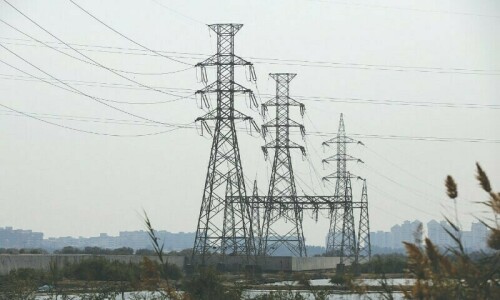
The federal government on Friday filed a request with the National Electric Power Regulatory Authority (Nepra) to reduce electricity prices by Rs1.71 per unit countrywide — including Karachi.
It was widely reported in the media through official leaks that the prime minister would announce a Rs8 per unit reduction in electricity rates in his speech to the nation on March 23. The prime minister, however, did not announce any such relief package in his Pakistan Day speech.
Turns out, the reduction in electricity tariffs, promised by the government, could not get past the International Monetary Fund (IMF), which was holding back a staff-level agreement (SLA) on the first biannual review of the $7 billion Extended Fund Facility (EFF).
But earlier, the Fund disclosed that it had allowed only a Re1 per unit reduction in the power tariff against a grid levy imposed on industrial captive power plants.
During the course of the March 4-14 review talks, a plan was shared with the IMF staff mission for around Rs2 per unit tariff reduction on account of some savings through the renegotiation of contracts with the independent power producers.
As an afterthought, the authorities were tempted to increase the petroleum levy on petrol and diesel by Rs10 to a maximum of Rs70 permissible under the Finance Act 2025 to divert the revenues towards maximising relief in power tariffs. This can have another impact of about Rs2-2.50 per unit.
According to the government’s request to Nepra, the prices will be reduced by increasing tariff subsidies.
The regulator will hear the government’s petition on April 4, with the request pertaining to all companies — including K-Electric.
According to the petition, the government has proposed to implement the change from April to June 2025.
The Prime Minister’s Office (PMO) had announced on March 15 that the premier had decided to maintain the petroleum prices at the existing level against up to Rs13 per litre worked out by the oil regulator and petroleum division with a promise to transfer its financial impact to electricity consumers.
Meanwhile, Nepra is reviewing petitions from power distribution companies (Discos) for annual base tariff revisions. So far, only seven independent power producers have approached Nepra for revised tariff adjustments following negotiations with a civil-military task force.
Sources said the IMF had also not allowed a reduction in tax rates on real estate transactions, but a 2pc federal excise duty on first transactions may be reduced in the coming budget.