Sugar prices in Pakistan are experiencing an alarming upward trend, reaching unprecedented levels in major cities and exacerbating financial distress for consumers, particularly during the holy month of Ramazan. The Pakistan Bureau of Statistics reported that sugar prices surged to Rs173 per kg by March 14, while in key urban centres such as Islamabad, Lahore, Karachi, Faisalabad, Peshawar, and Quetta, rates have climbed to Rs180-185 per kg.
Incidentally, the recent upward trend in sugar prices started less than a month ago when the Minister for National Food Security and Research Rana Tanveer Hussain announced that the retail price of sugar would be Rs130 per kilogram — similar announcements were made by Prime Minister Shahbaz Sharif himself too.
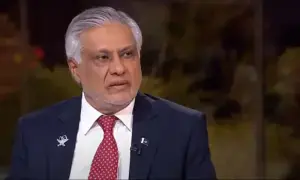
However, in response to the crisis, the prime minister has constituted a 10-member committee, led by Senator Ishaq Dar, to engage with the Pakistan Sugar Mills Association (PSMA) and negotiate price reductions.
Senator Dar announced that the sugar price should be Rs164 per kg, and it was noted that the primary factor behind this sharp price hike was excessive sugar exports over the past year, totalling 700,000 tonnes.
Lack of a sustainable framework has led to regulatory loopholes that benefit large mill owners at the expense of consumers
Besides, sugar producers have been demanding the government allow the export of surplus stock that would have no impact on the local supply chain.
In the last week of February 2025, the Sugar Advisory Board meeting chaired by Mr Hussain was informed that in the current season, 2024-25, Pakistan was likely to produce 6.8 million tonnes of sugar with a slight increase over the previous season, while the consumption is expected to be 6.6m tonnes (some leftover stock was present in the supply chain as well).
To take note of the situation, the government has directed the Federal Investigation Agency, along with the Competition Commission of Pakistan (CCP), to gather intelligence reports.
The CCP has again been directed by the government to curb cartelisation as well as price fixing in the sugar sector. However, past investigations and regulatory scrutiny, anti-competitive practices, and other actions by the CCP against the sugar industry remain unaddressed due to weak enforcement and protracted legal challenges.
The Competition Commission of Pakistan (CCP) has been actively investigating cartelisation in the sugar industry since 2009, and various enquiries have repeatedly found evidence of anti-competitive behaviour, with the PSMA allegedly coordinating price-fixing, supply restrictions, and production quotas to manipulate market conditions.
As early as September 2020, CCP teams raided PSMA’s Lahore and Islamabad offices, uncovering a trove of sensitive commercial data, including mill-wise and district-wise sugar stock positions, production figures, and sales records.
The evidence pointed to extensive coordination among sugar mills under PSMA’s influence. This led the CCP to issue show-cause notices to PSMA and its 84 member mills for engaging in cartelisation, a direct violation of Section 4 of the Competition Act, 2010. Subsequently, in August 2021, the CCP imposed a record Rs44 billion in fines on the PSMA and its affiliated mills.
However, the sugar industry swiftly moved to challenge the penalties in the High Courts of Sindh and Punjab and the Competition Appellate Tribunal (CAT), resulting in stay orders that have stalled enforcement. This legal deadlock has hindered the CCP’s ability to implement meaningful corrective measures.
Political influence and conflicts of interest
A CCP research study revealed that sugar industry expansion in Pakistan began in the late 1960s, with only a handful of mills operating at the time.
Today, there are 81 sugar mills, over half of which are owned by influential politicians and their extended families, including current cabinet members. This deep political entrenchment has led to severe conflicts of interest, where policy decisions often favour industry players rather than consumers.
The research underscores the need for comprehensive reforms, including deregulating the sector, promoting competition at both the farmer and mill level, and allowing market forces to determine sugar prices. However, successive governments have failed to implement a sustainable framework, leading to chronic price volatility, excessive government intervention, and regulatory loopholes that benefit large mill owners at the expense of consumers.
Legal bottlenecks and delayed justice
The CCP’s enforcement efforts have been largely hampered by delays in judicial proceedings. Over the past decade, the CAT remained inactive for nearly 7.5 years, causing an accumulation of 567 unresolved cases, with Rs 74 billion in pending penalties.
Additionally, 127 cartelisation-related cases are stuck in various courts, including 24 in the Supreme Court, 25 in the Lahore High Court, six in the Sindh High Court, and 72 in the CAT.
However, a major breakthrough occurred on February 27, 2025, when the federal government appointed a new chairman and two members for the CAT. Justice Sajjad Ali Shah, a former Supreme Court judge, now leads the tribunal, alongside members Dr Faiz Elahi Memon and Asim Akram. The expectation is that a functional tribunal will expedite cartel cases, allowing for long-overdue enforcement actions.
The effectiveness of CCP’s efforts largely depends on judicial efficiency, political will, and comprehensive market reforms. For now, however, the question remains: will this be another case of “all smoke and no fire”, or will the government finally take meaningful action against the sugar mafia? n
Published in Dawn, The Business and Finance Weekly, March 24th, 2025