0
0

• No additional revenue measures imposed; fiscal targets to be maintained through expenditure control
• MEFP still being finalised ahead of staff-level agreement
• IMF Executive Board approval expected by early next month
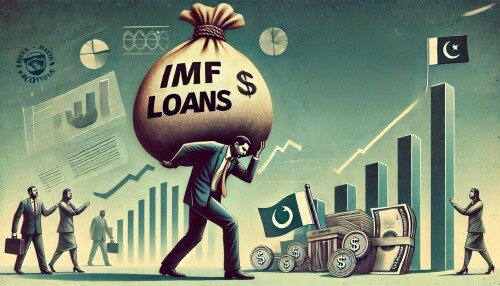
ISLAMABAD: Pakistan and the International Monetary Fund (IMF) on Friday concluded the first biannual review of the $7 billion Extended Fund Facility (EFF) on a positive note, without imposing additional revenue measures.
Instead, the government committed to maintaining fiscal targets through expenditure controls, particularly the development programme.
Official sources, however, confirmed that the draft of the Memorandum of Economic and Fiscal Policies (MEFP) was still being finalised before the formal announcement of a staff-level agreement (SLA). This would be followed by IMF’s Executive Board approval for the disbursement of about $1.1bn by early next month.
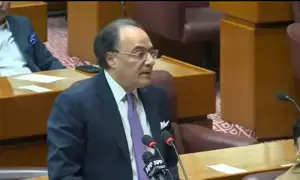
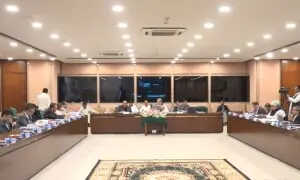
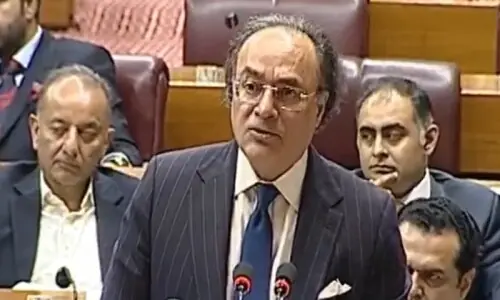
Therefore, both sides remained silent on the conclusion of talks, although Finance Minister Muhammad Aurangzeb, during the course of a wrap-up meeting on Friday morning, requested the IMF to release an end-of-mission statement by the evening.
However, the time gap and the travel schedule of the mission were delaying its issuance, an official who attended the meeting said. “There are no outstanding issues,” he said.
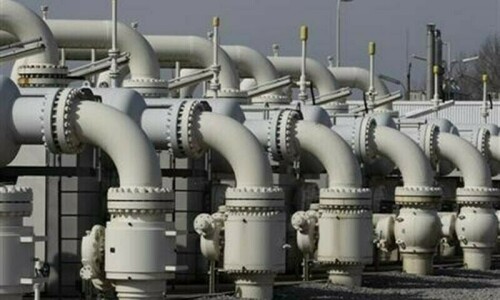
The officials said the most challenging aspect of the two-week engagements pertained to gas rates for industrial captive power plants, but a resolution was reached to the satisfaction of the IMF delegation, led by mission chief Nathan Porter.
The passage of the law for the introduction of agriculture income tax by all four provincial assemblies was also considered a landmark step, and the two sides agreed that a lot needed to be done on the ground for effective recoveries starting next year’s budget. The two sides would remain engaged over the next couple of months to address technical and procedural hiccups in aligning four provinces.
Revised macroeconomic indicators, particularly GDP growth projections, led to a downward revision of federal tax collection estimates by more than Rs600bn. The original budget projection of Rs12.9 trillion has now been adjusted to Rs12.3tr.
The officials said the IMF staff mission appreciated the overall performance on benchmarks and targets, but not without emphasising improved collections from retail and wholesale sectors where the authorities have so far struggled to meet targets.
The Fund’s team also called for improved collections from real estate sectors. The Federal Board of Revenue (FBR) reiterated its proposal to ease taxation on the real estate sector for better recoveries. The two sides may discuss it further in the run-up to the next year’s budget.
The second-quarter estimates for GDP resulted in the downward revision in the size of the economy to about Rs116tr from Rs124tr estimated for the current year in the budget 2024-25. Lower-than-projected inflation and economic growth were considered legitimate factors for revenue shortfall but still within the tax-to-GDP ratio targets.
Informed sources said the two sides would remain in contact virtually to finalise the MEFP and SLA and even thereafter for the next year’s budget consultations.
The sources highlighted that for the first time over the past programme reviews, the power sector had also met its targets on the back of higher base tariffs, lower interest rates, stable currency, etc., although technical losses and insufficient recoveries worried the IMF mission.
The IMF also stressed improvements in the track-and-trace system across sectors and enhanced implementation of point-of-sale (POS) systems in commercial activities. It also called for strong efforts to privatise power distribution companies and Pakistan International Airlines (PIA).
The authorities anticipate receiving the second tranche of over $1bn under the $7bn loan programme, which is largely considered a formality following compliance with key quantitative performance criteria, structural benchmarks and indicative targets.
The 37-month bailout package was finalised in July last year based on budgets approved by parliament and formally signed in September 2024. The first tranche of $1.1bn was released upfront, with the remaining seven equal instalments scheduled every six months, contingent on meeting performance targets.
Published in Dawn, March 15th, 2025