POLIO has emerged as a major challenge in Pakistan. It is not simply a challenge in the health sector, but has also become both a security and political issue. It has been reported that 74 polio cases emerged in the country last year.
Pakistan now has the dubious distinction of being one of the two remaining countries in the world — the other being Afghanistan — that is hosting a debilitating disease that leaves the patient paralysed in at least one of his or her limbs. The new year has barely begun but in the first few months alone, six polio cases have been confirmed in Pakistan.
But this time, the issue has taken a graver turn because, as reported, it has been politicised by those who are seen to be taking a federal versus provincial view of cases in Punjab. The National Institute of Health confirmed a case in Punjab based on tests conducted by the relevant authorities, whereas officials in Punjab challenged the claim terming it as a ‘mild’ case of polio, basically minimising its implications.
Meanwhile, financial corruption has also entered the scene, as per recent reports of external auditors not being satisfied with some transactions as shown in budgetary documents.
Several factors have impeded the success of the polio programme.
Ever since it was introduced in the country in 1974, the polio eradication programme has followed a bumpy trajectory as opposed to other immunisation projects. This intriguing failure has become a challenge, as Pakistan’s performance holds the key to the emergence of a polio-free world. Our failure to eliminate the disease has brought a lot of bad publicity for us.
The big question that we must ask ourselves is this: why is polio so difficult to eradicate when we have successfully reduced the incidence of many other diseases?
The problem is that the authorities whose job it is to look after the health of the people are not working as they should be. As Dr Shershah Syed, who is truly a ‘people’s doctor’, observed, our rulers were able to make nuclear bombs because they were determined to do so. Since polio mainly affects the children of the poor, those in power do not care. Hence, they focus on issues that are not relevant in order to cover up their own deficiencies. The basic fact is that polio can be weeded out of the country if the political will is shown by public health officials. Unfortunately, the government has not been serious about it.
Another factor that doctors have pointed to is the lack of care to ensure that the cold chain is carefully maintained at all times. The polio vaccine is extremely sensitive in terms of temperature. It has to be stored in a cool environment to preserve its effectiveness. The carelessness in not doing so was evident in the emergence of new cases, where it was argued that incorrect temperature storage affected the vaccine though it still managed to give ‘mild’ immunity to the patient.
The issue of the cold chain has been taken into account this year after a long time. The fact of the matter is that this should remind us that we need to pay more attention to such important aspects and even if there is only one polio case that has resulted from improper storage of the vaccine, it should be investigated. There have been instances where mothers have claimed their child contracted polio despite taking the drops.
Another serious issue dogging the polio programme is the unusually large number of personnel — up to 400,000 — employed to implement this programme, which has seen billions of rupees spent on it over a number of years. The number deployed is so large that it gives rise to speculation that there might be some who may not want to see the programme reach a fruitful conclusion, as it offers the prospect of continued employment to a large number of people.
It is time the government looked into such concerns and prepared plans to provide alternative employment in other areas of the health sector once the staff is no longer needed for the administration of polio drops.
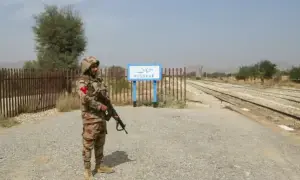
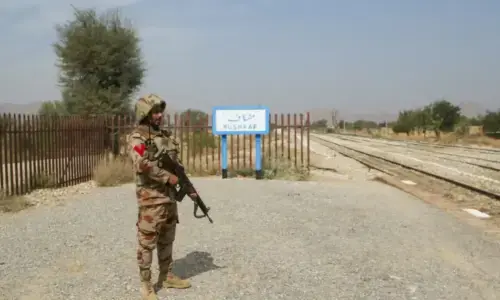
According to Unicef, in 2021, Pakistan’s polio programme was so successful that only one case was detected that year. There were high hopes that this disease would soon be eradicated in the country. Unfortunately, terrorists and extremists overtook it, impeding the successful approach. By providing safety to the polio workers with strategic planning, much had been achieved in delivering polio drops to Pakistan’s children and carrying the programme forward.
One sincerely hopes that our political leaders show some sense and do not argue over trivial issues of ‘mild’ or ‘strong’ cases of polio, because polio is, after all, polio.
Published in Dawn, March 7th, 2025