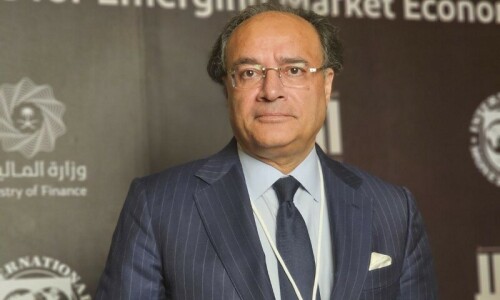
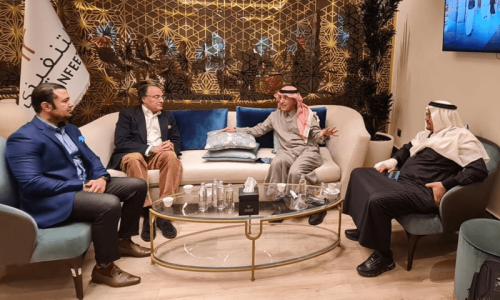
Finance Minister Muhammad Aurangzeb has said Pakistan will be able to meet its revenue goals for the year without further burdening existing taxpayers, according to an exclusive interview with Bloomberg News on Sunday in Saudi Arabia.
Aurangzeb was in the Gulf country over the weekend for the Emerging Markets Conference 2025 in AlUla, which brought together finance ministers, central bank governors, policymakers and economic experts from around the world.
A day earlier, Pakistan and Saudi Arabia explored ways to enhance cooperation in bilateral commerce, investment and finance, reaffirming their commitment to further strengthening this strategic partnership.
Aurangzeb’s meeting comes as Pakistan looks to curb the criticism it has faced since last year over unpopular reforms, including record-high taxes.
“We are moving in the right direction,” Aurangzeb told Bloomberg in AlUla on Sunday. “Any shortfall is going to be met through expanding the net and stronger compliance.”
Raising the tax-to-GDP ratio is a key condition of Pakistan’s $7 billion loan deal with the International Monetary Fund (IMF), which was needed to shore up a faltering economy and manage its mounting debts.
In his interview, Aurangzeb said he was confident about meeting key requirements of the IMF programme, as Pakistan’s tax-to-GDP ratio stood at 10.8 per cent at the end of December, higher than the target of 10.6pc.
No new revenue measures will be added this fiscal year ending June, he said.
Pakistan’s first review of the programme is scheduled for later this quarter.
While speaking on Pakistan’s plans to introduce new agriculture income tax laws, the finance minister said, “It is a very important step in terms of broadening the tax base.”
All four provincial assemblies recently approved laws to hike taxes on agricultural income, a move agreed upon with the IMF to help expand the tax net.
When asked about the impact of US President Donald Trump’s new tariffs proposal, Aurangzeb said the changes could be a “real opportunity” for Pakistan to step up regional trade with nations in the Middle East and Central Asia.