US will extradite Mumbai attacks suspect to India


 0
0


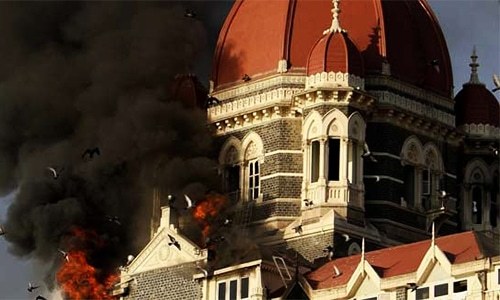
WASHINGTON: The US has approved the extradition of a suspect in the 2008 militant attacks in India’s financial capital Mumbai in which over 160 people were killed, President Donald Trump said on Thursday in a press conference with Indian Prime Minister Narendra Modi.
Trump did not name the individual in the press conference, but a joint statement from the two sides later identified the man as Tahawwur Hussain Rana, a Canadian citizen of Pakistani origin who was based in Chicago, was convicted in 2011 and later sentenced to 13 years in prison.
Late last month, the US Supreme Court rejected Rana’s review petition against his extradition. Rana was previously sentenced to US federal prison for providing support to the Lashkar-e-Taiba.
Speaking at a joint media briefing with Modi, Trump announced that his administration had approved the extradition of one of the “very evil people” of the world to India.
Modi-Trump bonhomie defies punitive US approach towards much of the world
“He is going to be going back to India to face justice,” he said.
“We’re giving him back to India immediately,” Trump added, hinting that more such extraditions could follow as “we have quite a few requests (from New Delhi).”
Modi, in turn, expressed gratitude to Trump for the decision.
Trump was also asked about Sikh separatists in the US, whom India calls security threats. Although he did not respond directly to the question, Trump said India and the US worked together on crime.
Since 2023, India’s alleged targeting of Sikh separatists in the US and Canada has emerged as a wrinkle in ties, with Washington charging an ex-Indian intelligence officer in a foiled US plot.
Bonhomie
Narendra Modi’s visit seemingly defied the new US administration’s punitive approach to much of the world, as the Indian leader offered to ramp up trade with Washington.
He had offered quick tariff concessions ahead of his visit, with New Delhi slashing duties on high-end motorcycles — a boost to Harley-Davidson, the iconic US manufacturer whose struggles in India have irked Trump.
India has already accepted a US military flight carrying 100 shackled migrants last week as part of Trump’s immigration crackdown.
The treatment drew protests from India’s opposition which accused Modi of sacrificing the dignity of citizens to please Trump.
Continuing a push from his predecessor Joe Biden, Trump said that the two countries also planned investment in ports, railways and underseas cable to “build one of the greatest trade routes in all of history,” running from India to Israel to Europe and beyond.
Trump has duelled with both friends and foes on economic issues, and, hours before their meeting, announced reciprocal tariffs on all countries, including India.
Speaking next to Modi, he called India’s “unfair, very strong tariffs” a “big problem”, but said that the two countries would hold negotiations to close a trade deficit in India’s favor.
Modi said that the world’s largest and fifth-largest economies would work on a “mutually beneficial trade agreement” to be sealed “very soon,” with a focus on oil and gas.
Only the fourth world leader to visit the White House since Trump’s return, Modi described the fellow nationalist as a friend.
The two also committed to “strengthen cooperation against terrorist threats from groups”, including Al Qaeda, the militant Islamic State group, Jaish-e-Mohammad, and Lashkar-e-Taiba.
Additionally, they “pledged to work together to prevent the proliferation of weapons of mass destruction and their delivery systems and to deny access to such weapons by terrorists and non-state actors.”
Published in Dawn, February 15th, 2025