QUETTA: The FAO representative in Pakistan, Florence Rolle, during a visit to Quetta held discussion with Balochistan officials about EU-funded projects “Post Floods Resilient Recovery and Strengthening of the Livestock Sector in Balochistan” and “Revival of Balochistan Water Resources Programme.
Accompanied by Waleed Mahdi, the head of FAO office in Balochistan, and James Okoth, the head of Sindh office, Ms Rolle met Agriculture Secretary Ali Akbar Baloch, Livestock Secretary Tayyab Lehri, Forest Secretary Noor Ahmed Pirkani, and Provincial Disaster Management Authority (PDMA) Director General Rafiq Gohramzai.
The discussions centered on enhancing collaboration between FAO and the government of Balochistan to advance sustainable practices in agriculture, livestock, irrigation, and forestry.
Karez project launched
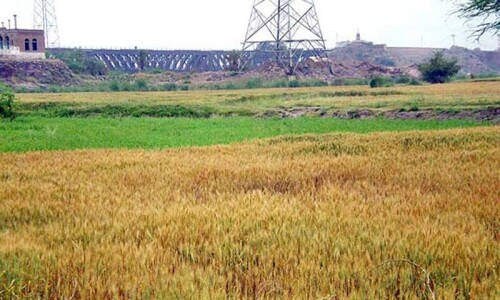
Ms Rolle laid the foundation of Quetta’s Chashma Achozai Karez rehabilitation project, an underground water channel serving over 3,000 residents and irrigating around 500 acres of farmland. The rehabilitation of Karez will enhance water access and agricultural sustainability for the community living in the area.
She also inspected the rehabilitation of earthen bunds in Chashma Achozai, which aim to improve grazing areas and increase forage availability for livestock.
In Killi Atakzai village, Hanna Urak, Quetta, she inaugurated the first of 99 climate-adaptive animal shelters, which are being built in various districts of Balochistan under the Revival of Balochistan Water Resources Programme.
These shelters integrate rooftop water harvesting techniques and improved hygiene facilities to promote sustainable livestock management. The initiative ensures equitable access for female farmers, underscoring the FAO’s commitment to fostering inclusivity and sustainable development.
She also visited farmer field school in Killi Sufi Kuchlak village, where farmers are learning innovative onion farming techniques, including seed testing, certification, and water-efficient trickle irrigation. These practices are contributing to increased incomes and enhanced water productivity.
Ms Rolle also visited a local beneficiary’s field, where FAO’s distribution of certified Alfalfa seeds is enriching soil fertility, boosting up fodder availability, and improving livestock health — key elements in promoting sustainable agricultural practices.
Published in Dawn, January 19th, 2025