RIYADH: Saudi Arabia on Sunday called for the lifting of sanctions on Syria after meetings with top diplomats from the Middle East and Europe that focused on the war-ravaged country’s future.
The Gulf kingdom, the region’s biggest economy, is seeking to increase its influence in Syria after Islamist-led rebels toppled longtime ruler Bashar al-Assad last month, analysts say.
“We stressed the importance of lifting unilateral and international sanctions imposed on Syria, as their continuation hinders the aspirations of the Syrian people to achieve development and reconstruction,” Saudi Foreign Minister Prince Faisal bin Farhan said after Sunday’s talks concluded in Riyadh.
The agenda included a meeting of Arab officials as well as a broader gathering that also included Turkiye, France, the European Union and the United Nations.
EU leaders to review steps for future govt in Damascus
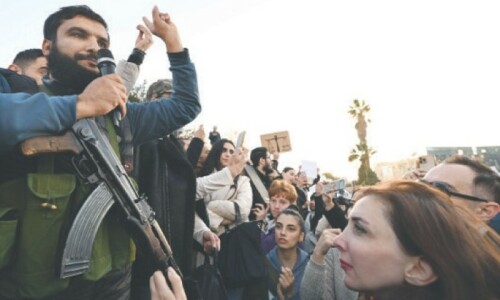
Syria’s new leader Ahmed al-Sharaa, who led the main rebel group in the alliance that overthrew Assad, is pushing for sanctions relief. At the talks his administration was represented by foreign minister Asaad al-Shaibani.
Sanctions
The US Treasury Department earlier said it would ease the enforcement of restrictions affecting essential services such as energy and sanitation. But officials in Washington said they would wait to “see progress” before any wider easing of sanctions.
Western powers, including the United States and the EU, imposed heavy sanctions on Assad’s government over crackdown on anti-government protests in 2011. However, some US sanctions long pre-date the unrest, with Washington labelling the country as “state sponsor of terrorism”, years after Israel illegally occupied Golan Heights.
EU’s top diplomat Kaja Kallas said the 27-nation bloc could begin lifting sanctions if Syria’s new rulers took steps to form an inclusive government that protected minorities.
European foreign ministers are due to meet on Jan 27 to discuss the issue, he told reporters in Riyadh.
Possible priorities for relief include “those sanctions that are hindering the building up of a country, access to banking services and all these things”, she said. “If we see the developments going to the right direction we are ready to do the next steps,” she added.
German Foreign Minister Annalena Baerbock told reporters in Riyadh that her government wanted a “smart approach” that would enable aid to reach Syrians.
“Sanctions against Assad’s henchmen who committed serious crimes during the civil war must remain in place … Syrians now need a quick dividend from the transition of power,” she said, adding that Germany would provide another 50 million euros “for food, emergency shelter and medical care”.
According to the UN, seven in 10 Syrians need help.
A statement published on Sunday evening by Saudi state media did not include a call from all participants for sanctions relief, instead saying “steps were discussed to support the brotherly Syrian people and provide them with all aid and support in this important stage of their history”.
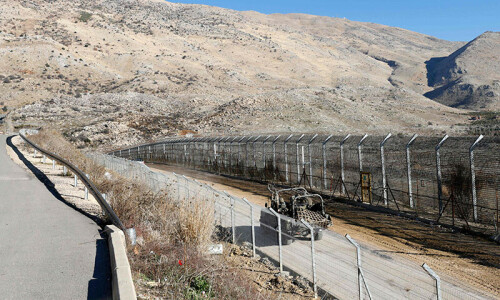
It also voiced concern about Israel’s entrance into the buffer zone that separated Israeli and Syrian forces in the Golan Heights.
Saudi weighs support
Saudi Arabia, which cut ties with Assad’s government in 2012 and had long openly championed his overthrow, hosted an Arab League meeting at which Assad was welcomed back into the regional fold in 2023.
Riyadh’s decision to host Sunday’s talks “sends the message that Saudi Arabia wants to take the lead on coordinating the regional effort to support Syria’s recovery,” said Anna Jacobs, non-resident fellow at the Arab Gulf States Institute in Washington.
“But the big question is how much time and how many resources will Saudi Arabia devote to this effort? And what is possible with many of the sanctions remaining in place?”
Saudi Arabia is among the countries taking a more cautious approach to Syria’s new administration compared to Turkiye and Qatar, which were the first nations to reopen embassies in Damascus soon after Assad’s fall, said Umer Karim, an expert on Saudi politics at the University of Birmingham.
Saudi officials are nevertheless “positively approaching” the new leaders in Syria, looking to see if they can “control the more extreme elements in (their) ranks”, Karim said.
The group that Sharaa leads, Hayat Tahrir al-Sham, is rooted in the Syrian branch of Al-Qaeda, but years ago broke disassociated with the group and sought to moderate its image.
Published in Dawn, January 13th, 2025