AS much mistrust marks Pakistan’s relations with the Afghan Taliban, Kabul’s rulers are reaching out to regional states in order to break out from their isolation and deepen economic ties.
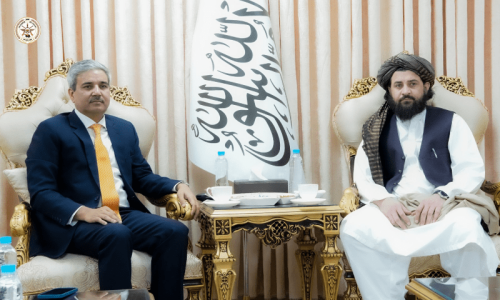
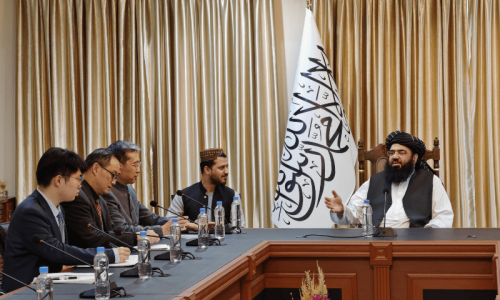
While no one has formally recognised the Taliban regime, states are doing business with Kabul just short of recognition. In a significant development, the Taliban foreign minister met the Indian foreign secretary in Dubai recently, with the Afghan side describing India as a “significant regional and economic partner.”
Trade relations were apparently the key area of discussion. It should be remembered that India was a major player in Afghanistan before the 2021 Taliban takeover. According to media reports, New Delhi had pumped $3bn into Afghanistan for ‘reconstruction’ projects, and the erstwhile Northern Alliance members had warm relations with India. The Indians have reacted cautiously with the Taliban, but matters are proceeding nonetheless. The Taliban also maintain significant links with China and Russia.
These developments should concern Pakistan, and make its policymakers revisit their Afghan strategy. The stark fact is that while the Afghan Taliban may be difficult customers, Pakistan cannot afford a hostile neighbour to its west. Islamabad’s concerns about TTP bases in Afghanistan are valid, but it needs to perhaps change its strategy with the Taliban so that the message sinks in.
At a recent seminar in Islamabad, some experts were of the view that instead of communicating with the rulers in Kabul, Pakistan must raise the TTP issue with the Taliban leadership in Kandahar, from where the real power in Afghanistan flows.
Though Taliban supreme leader Hibatullah Akhundzada is a reclusive figure, if Pakistan were to successfully engage him or those close to him, and convince them to relocate the TTP and other anti-Pakistan terrorists away from the border, this might improve the security situation in the country with minimum costs. Such moves have been tried before — with limited success — when the Taliban leadership issued a fatwa in 2023 stopping its cadres from waging a ‘jihad’ inside Pakistan.
The Taliban are welcome to keep the TTP, as long as they pose no harm to Pakistan. The present strategy — limited talks with and kinetic action against Kabul — has failed to resolve the problem. As others are making diplomatic inroads with the Afghan Taliban, including unfriendly governments, Pakistan must reassess and readjust its strategy.
Islamabad should work with other regional states to stress that the Taliban must take stronger counterterrorism measures, so that militant groups cannot threaten Afghanistan’s neighbours. Yet it must also engage the Taliban high command in Kandahar, as well as the politicians in Kabul, so that the doors of negotiation are not closed. If relations sour further with Afghanistan, it will add to insecurity in this country, and give hostile states room to manoeuvre.
Published in Dawn, January 11th, 2025