A total of 379 missing persons cases were submitted to the Commission of Inquiry on Enforced Disappearances (COIOED) in 2024, it emerged on Tuesday.
The commission was set up in 2011 to trace the missing persons and fix responsibility on the individuals or organisations responsible. Figures released on Tuesday showed that 427 cases were disposed of in 2024.
The commission said that the total number of cases received up till December 2024 was 10,467 while 8,216 cases were disposed of with a total of 6,599 people traced so far and 1,617 cases disposed of.
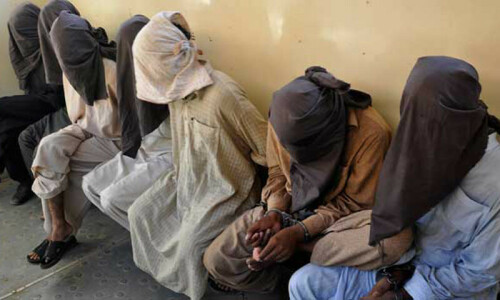
The report added that 2,251 cases were left while 4,613 were returned home, 1,011 were present in internment centres, 687 were in prisons and 288 were found dead.
The monthly progress report for December, dated January 1, said 29 cases were received and 44 were disposed of with 10 of them unrelated to enforced disappearances, 23 returned to their homes, five were confined in internment centres, four were confined in jails and two bodies were found.
The Constitutional Bench of the Supreme Court emphasised last month that only parliament holds the authority to address and resolve the longstanding, yet unlawful, practice of enforced disappearances — a persistent issue that has plagued the nation for decades.
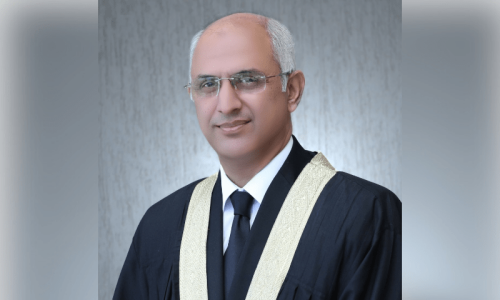
“The solution to this problem is to be found by parliament,” observed Justice Jamal Khan Mandokhail, a member of the six-judge Constitutional Bench.
“The court has always recognised parliament as the supreme body and now it is for parliament to prove it so,” he said.
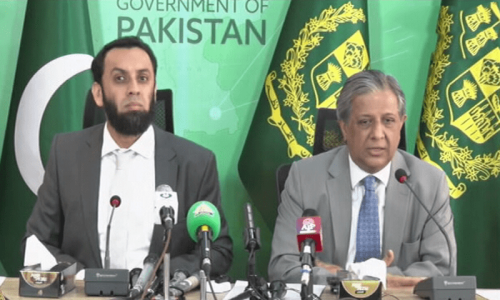
On April 23, Law Minister Azam Nazeer Tarar had said that the issue of missing persons could “not be solved overnight” but the government was committed to finding a solution by first achieving a consensus amongst all stakeholders.
The law minister emphasised that when discussing the issue of missing persons, it must be noted that Pakistan had performed the role of a frontline state in a war-ridden area for the past four decades, adding that the circumstances in neighbouring countries had further exacerbated internal challenges.
Azam noted that the people and army of Pakistan had paid an “unbelievable price” in the fight against terrorism with their sacrifices, adding that the same must be taken into consideration when finding a solution to the issue of missing persons.