0
0

KARACHI: The Knowledge Forum in collaboration with the Human Rights Commission of Pakistan (HRCP) organised a webinar on Thursday to share the key findings of a study titled ‘Gasping for Survival’, which looks at the impact of gas shortages on low-income households.
The study authored by Najamuddin, a lawyer and human rights researcher, was conducted in nine districts in four provinces with some 90 households in 2023. It highlights the many challenges faced by them, including educational and related to general and mental health issues.
It also turned out that only 22 per cent homes in Pakistan have gas connections. But all is not well for them either as they also experience gas loadshedding. Pakistan has only 0.4 per cent of global gas reserves but our consumption is twice that much. Also, the consumers seem to think that this gas is clean fuel which is not the case.
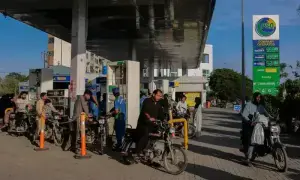
The researcher said that the gas loadshedding points to the government’s inability to ensure gas availability. “Things don’t improve after winter. There is continuous load shedding, even during Ramazan. People are forced to seek alternatives such as wood for burning or LPG gas cylinders,” he said.
Najamuddin emphasised the need for alternative energy sources while stating that over-reliance on natural fuels had wasted valuable resources and exacerbated inequality. He called for a diversified energy mix, energy-efficient technologies and collaboration among stakeholders to address those challenges. He also called for greater community mobilisation and evidence-based advocacy to address these challenges, particularly focussing on the most vulnerable segments of society.
Meanwhile, community engagement expert Kausar S. Khan highlighted the importance of the study in bringing critical knowledge into public domain. She noted that while the study’s findings were significant, the action needed to mobilise communities and policymakers was still lacking. So there was the need for further research to mobilise policymakers.
Quoting the World Health Organisation, she underscored how gas shortages impact community health and urged society to take ownership of research-driven solutions for a transition to clean energy. HRCP Director Farah Zia praised the study’s unique approach.
Published in Dawn, January 3rd, 2025