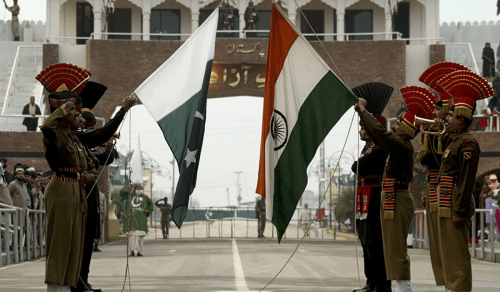
WASHINGTON: A recent report in the Washington Post has laid bare the ins and outs of an Indian intelligence campaign, which has been orchestrating killings — on Pakistani soil — of individuals it deems a threat to its national interests
According to WaPo, the Research and Analysis Wing (RAW) has been running an assassination campaign in Pakistan since 2021, an operation that shares similarities with covert actions recently attributed to Indian agencies in North America.
Based on interviews with Pakistani and Indian officials, militant associates, family members, and a review of police documents, the report documents six killings in Pakistan that are allegedly part of this coordinated effort.
The campaign reportedly focused on leaders of two militant outfits, the banned Lashkar-e-Taiba (LeT) and Jaish-e-Muhammad (JeM), both of which India accuses of carrying out attacks against its personnel and civilians.
Details RAW’s use of local criminals, Afghan hired guns, hawala networks from Dubai to carry out assassinations
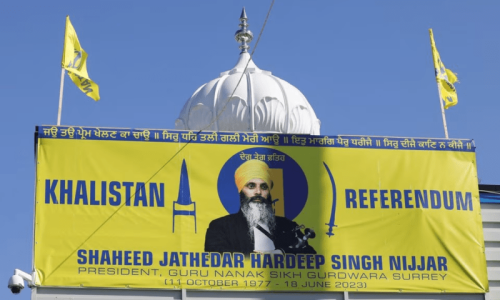
The report notes that India extended this campaign beyond Pakistan, employing similar tactics in North America against Sikh activists, including Hardeep Singh Nijjar in Canada and Gurpatwant Pannun in the United States.
One of the high-profile targets in Pakistan was Amir Sarfraz Tamba, implicated in the 2013 death of Indian prisoner Sarabjit Singh in Kot Lakhpat Jail.
According to the report, RAW used local criminals and Afghan-hired guns to carry out these assassinations, ensuring that no Indian nationals were directly involved. To maintain plausible deniability, RAW officers reportedly relied on intermediaries in Dubai and financed the operations through informal hawala networks spread across multiple continents.
Pakistani investigators uncovered evidence of RAW’s activities during a raid on a safe house in Dubai. Two Indian nationals, Ashok Kumar Anand Salian and Yogesh Kumar, were accused of coordinating the killings, with Pakistani authorities displaying scans of their passports.
Comparison to American campaign
The report draws comparisons between the tactics used in Pakistan and similar Indian operations against Sikh activists in Canada and the US. In both cases, Indian operatives allegedly relied on local criminal networks and poorly trained contractors.
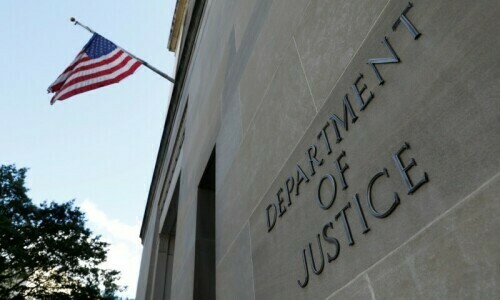
However, these operations faced significant setbacks in North America, including the plot to assassinate Sikh activist Gurpatwant Pannun in New York. The assassination attempt failed when an intermediary unknowingly approached a Drug Enforcement Agency (DEA) informant posing as a hitman.
Canadian officials have also accused Indian diplomats of surveilling, intimidating and plotting to assassinate Sikh activists. Electronic communications reportedly linked these diplomats to such activities, further straining relations between India and Western nations.
The report also revealed that former ISI chief Nadeem Anjum had raised concerns about Indian assassinations with CIA Director William J. Burns in 2022, well before allegations of similar operations in North America came to light.
Expert opinion
The report cites Christopher Clary, a political science professor at the State University of New York, who compared RAW’s assassination tactics to those of Israel’s Mossad. Clary suggested that while these methods are effective in less-developed countries, they face greater scrutiny and legal challenges in Western nations.
Srinath Raghavan, an Indian military historian, observed that Indian PM Narendra Modi’s government had actively promoted covert operations to project strength, both for Pakistan and domestic audiences. However, analysts caution that such actions could heighten tensions in South Asia and provoke retaliatory measures.
India’s Ministry of External Affairs declined to comment on the report, maintaining its longstanding position of neither confirming nor denying involvement in specific killings, but Indian officials have previously justified their actions.
Published in Dawn, January 2nd, 2025