RAWALPINDI: Speakers at a workshop on Monday unanimously endorsed a resolution calling for the minimum age of marriage for girls to be linked to their national identity cards across the country.
The resolution to leverage technology and national identity cards to prevent child marriages was supported by a diverse group of stakeholders, including health professionals, religious scholars, lawyers, academicians, media persons, and government officials from various departments, including education, health, population welfare, women development and local government.
The resolution’s push for Nadra to register all marriages online is a significant step towards enforcing the minimum age of marriage for girls in Pakistan. By leveraging technology and national identity cards, the resolution aims to prevent underage marriages and ensure that girls are socially, mentally, and physically equipped to bear the responsibilities of marriage.
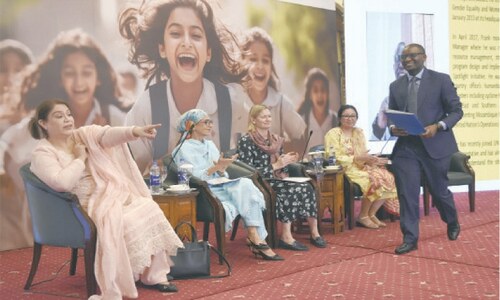
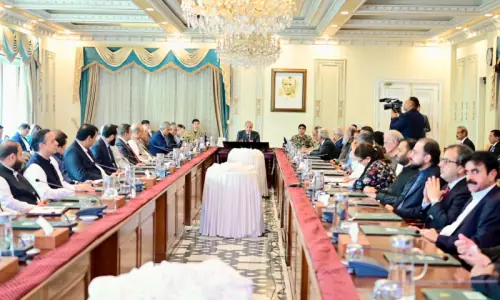
The workshop on “Sexual and Reproductive Health Rights (SRHR) and Child Marriages: Challenges and Way Forward”was jointly organised by Potohar Organisation for Development Advocacy (PODA) and the District Population Welfare Office Rawalpindi.
Experts stress need for mindset shift to consider underage marriage socially unacceptable
The workshop was held at Family Health Clinic and Training Hall at Benazir Bhutto Hospital. PODA is implementing a three-year project “Reduce Early Marriages to Enhance Gender Equality” in 41 districts of Punjab, supported by the Norwegian embassy Islamabad.
Advocate Khawaja Zahid Nasim, Legal Adviser to PODA and Chairperson of the Naheeda Mehboob Elahi Foundation, emphasised the need to uniformly define a minor as someone under 18 years of age across all laws.
He pointed out a discrepancy in the Child Marriage Restraint Act 2015 Punjab, which sets the minimum marriage age for girls at 16, yet defines a “minor” as any child under 18 years of age. A unified definition for all children regardless of gender is essential for protecting their rights, he added.
Nabeela Aslam, Project Manager PODA, quoted the United Nations Convention on the Rights of the Child, which defines a child as any person under 18 years old. She said this definition ensures equal protection and rights for all children, regardless of gender, until they reach adulthood. She stressed that adopting a unified definition is crucial for promoting the well-being and safety of all children.
Azhar Mehmood, Deputy Director of the Population Welfare Office, emphasised the need for a mindset shift to consider underage marriage a socially unacceptable phenomenon.
He praised the Punjab chief minister’s efforts and highlighted the importance of linking the minimum marriageable age of girls to their national identity card. He noted that while the law in Punjab sets the marriageable age at 16 for girls, it is not being implemented effectively.
He said despite good literacy rates among girls, there is a need to change people’s perspectives on early marriages and associated health problems.
Dr Asima Tariq, In-charge Family Health Clinic at Benazir Bhutto Hospital, Dr Ayesha Zulfiqar and Dr Mariam Ali highlighted the severe implications of child marriages on girls below 18 years of age.
They emphasised that early marriage often leads to multiple abortions, which puts immense pressure on healthcare facilities, particularly in resource-constrained environments.
The experts said delaying marriage until girls are at least 18 years old is crucial to prevent these health risks and ensure better outcomes for young women.
Dr Samina Batool advocated for incorporating information on child marriages and their health consequences into the educational curriculum. She also emphasised the need to raise awareness about this critical issue in rural communities.
Maulana Hafiz Mohammad Iqbal Rizvi stressed the importance of engaging with religious scholars to address child marriages. He suggested utilising their influence to change public perception and promote girls’ education, ultimately upholding their fundamental rights, just as it was effectively done in the instances of polio vaccination campaigns.
Published in Dawn, December 24th, 2024