Inflation, elections and conflict dominated 2024


Inflation dropped in most economies around the world in 2024, but voters didn’t care.
Angered by the hefty ramp-up in prices for everything from eggs to energy over the past few years, they punished incumbent parties at almost every opportunity. The pain of inflation lingers, and ruling parties took the blame in election after election.
In the United States, higher costs helped Donald Trump win a second term as president four years after he was voted out of the White House and then falsely claimed election fraud.
His supporters failed in their bid to overturn Trump’s defeat by storming the US Capitol on Jan 6, 2021. This year, they made their voices heard at the ballot box, ushering in a new American leadership likely to test democratic institutions at home and relations abroad.
The inflation-driven anti-incumbent sentiment also ushered in new governments in Britain, Botswana, Portugal and Panama. South Korean voters put the opposition into power in its parliament, a check on President Yoon Suk Yeol.
In early December, the president imposed martial law, a move the National Assembly quickly reversed. Elections also shook up France, Germany, Japan and India.
One place there was no change: Russia, where Vladimir Putin was re-elected president with 88 per cent of the vote, a record in post-Soviet Russia.
Moscow continued to prosecute its war against Ukraine, grinding out notable territorial gains. The big question is what impact Trump’s return to the White House will have on the conflict. He has promised to end the war in a day. Many in Ukraine and elsewhere in Europe fear that will mean siding with Putin and freezing the status quo.
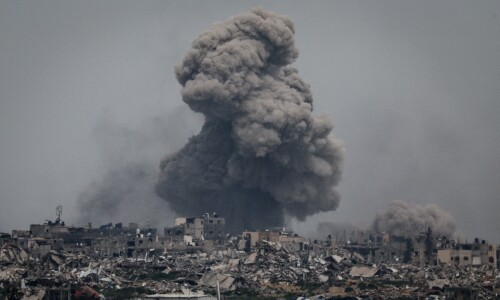
In the Middle East, Israel continued its invasion of Gaza with at least 45,259 Palestinians killed so far. The Israeli invasion also extended to Lebanon, where it left at least 3,823 people dead and Hezbollah damaged. In Syria, a well-coordinated collection of rebel groups toppled Bashar al-Assad and now seeks to run the country.
In business, companies around the world grappled with how to adapt to artificial intelligence. The dominance of tech companies for investors can be summed up in this simple fact: seven tech firms — the so-called Magnificent Seven — now account for more than one-third of the S&P 500’s market cap.
Elon Musk, who runs one of those companies, Tesla, is an adviser and financial backer to President-elect Trump. Looking ahead, that combination of tech bro mojo and political power could well define 2025.