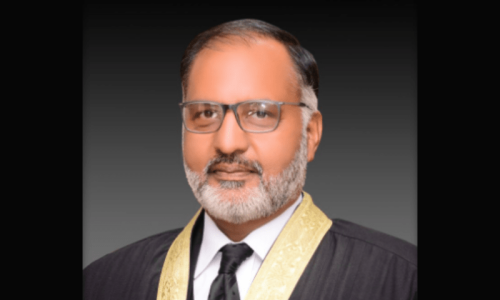
ISLAMABAD: In a surprising development, the Election Commission of Pakistan (ECP) on Tuesday removed an Islamabad High Court (IHC) judge, Justice Tariq Mehmood Jahangiri, as the election tribunal head for Islamabad.
The decision has been taken on applications filed by three PML-N leaders from Islamabad who sought the transfer of election petitions against them to another tribunal.
The move has raised legal questions about whether the ECP can unilaterally remove a sitting judge appointed in consultation with the IHC chief justice.
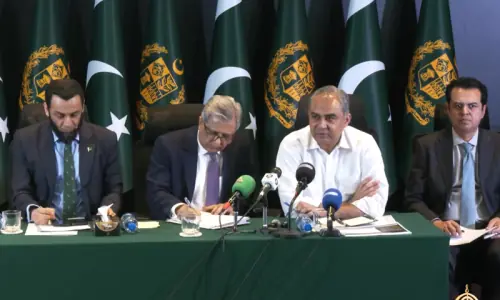
The ECP, in three separate but identical orders announced by a four-member bench headed by Chief Election Commissioner Sikandar Sultan Raja, justified the move under Articles 218(3) and 10-A of the Constitution and Sections 3, 4 and 151 of the Elections Act.
The election petitions have now been transferred to the election tribunal for Rawalpindi division, presided over by retired Justice Abdul Shakoor Paracha, who has been granted jurisdiction over Islamabad Capital Territory as well.
Transfers petitions against three PML-N lawmakers to tribunal led by retired judge
“The previous notification of the election tribunal comprising Justice Tariq Mehmood Jahangiri for the Islamabad Capital Territory is hereby withdrawn. The office is directed to take follow-up action accordingly,” the orders said.
The decision is based on pleas filed by PML-N leaders Dr Tariq Fazal Chaudhry, Raja Khurram Nawaz and Anjum Aqeel Khan.
The respondents in the cases are PTI members Shoaib Shaheen, Syed Muhammad Ali Bokhari and Aamir Mughal.
One of the ECP orders cited a Lahore High Court judgement, which said that the concept of due process “rests in the idea that the legal proceedings be carried out in accordance with the established rules, express statutory provisions and settled principles for deciding the rights of litigants”.
The order highlighted that with the inclusion of Article 10-A in the Constitution through the 18th Amendment, a fair trial and due process are fundamental rights.
The order also mentioned an IHC order setting aside the ECP’s previous order of appointing the same retired judge, Abdul Shakoor Paracha, as tribunal head for Rawalpindi and Islamabad.
It said the only ground for the decision was that the ECP had proceeded in haste.
It said that the court also mentioned that the power of transfer was supervisory and administrative and must be exercised after providing an opportunity to every person concerned.
“No other ground has been mentioned by the high court for setting aside the order of the Commission. In the present case, which is the second round of litigation, the Commission has provided ample opportunity to the parties to defend their stance by filing additional grounds, written replies, amended replies and extensive arguments.”
Published in Dawn, December 4th, 2024