• Appellants were snatched from their mothers before the age of seven
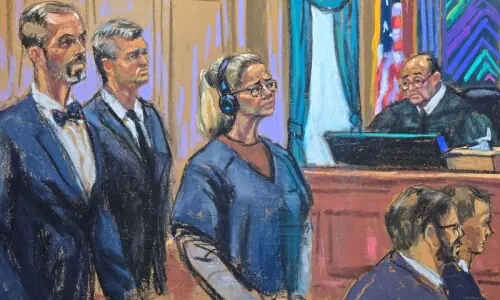
BRUSSELS: The Belgian state was ordered on Monday to pay reparations to five mixed-race women who were forcibly placed in an orphanage 70 years ago under a colonial-era practice that judges said constituted a crime against humanity.
Reversing an earlier ruling that found too much time had passed since the alleged wrongdoing, the Brussels appeals court said the women, born in Belgian-ruled Congo and now in their 70s, were abducted in “an inhumane act of persecution”.
The conduct of colonial Belgium constituted a crime against humanity and as such could not be subject to a statute of limitations, in line with a UN resolution adopted after World War II, the court found.
The state was ordered to “compensate the appellants for the moral damage resulting from the loss of their connection to their mother and the damage to their identity and their connection to their original environment.” “At last, we’ve been heard and the courts have ruled in our favour,” one of the five women at the heart of the case, Lea Tavares Mujinga, 78, said as she celebrated with her fellow plaintiffs.
“It’s a very large part of our lives that was taken away from us, that the Belgian state had broken. We’ll never be able to get it back. But at least it’s a gesture of some relief.”
A lawyer for the plaintiffs called the verdict a “historic victory” — marking the first time a country has lost a court case on such a legal basis for acts committed as part of colonisation.
“It’s made a huge difference to recognise a colonial fact as a crime against humanity,” said Jehosheba Bennett. The women had demanded compensation of 50,000 euros ($55,200) each.
The case was the first in Belgium to shed light on the fate of biracial children born in the former Belgian colonies — DR Congo, Rwanda and Burundi — who are thought to number around 15,000, though there has never been an official count.
Most of the children born of a union between a black woman and a white man were not recognised by their father and were not allowed to mix with either whites or Africans. As a result, many were placed under state guardianship and put in orphanages usually run by the Catholic Church.
‘Children of sin’
The women at the centre of the legal case said they were taken away from their families, brought up in a convent, mistreated and then abandoned when the Belgian Congo gained independence in 1960.
A second plaintiff, Simone Ngalula, said the ruling had restored her “dignity.” “Are we people or are we animals?” asked the 74-year-old, who was taken at the age of two along with her siblings and placed in a convent, after her widowed mother was deemed unable to take care of them.
In a statement, the court detailed how the appellants “were abducted from their respective mothers, without their consent, before the age of seven, by the Belgian State.” This was “in execution of a plan to systematically search for and abduct children born to a black mother and a white father, raised by their mother in the Belgian Congo, solely because of their origins,” it added. Belgium apologised to the mixed-race descendants of its white colonists in 2019.
Belgium’s rule over what is now the Democratic Republic of Congo was one of the harshest imposed by the European powers that ruled most of Africa in the late 19th and 20th centuries.
King Leopold II governed the vast country — a swathe of central Africa the size of continental western Europe — as his personal property between 1885 and 1908, before it became a Belgian colony.
Published in Dawn, December 3rd, 2024