0
0

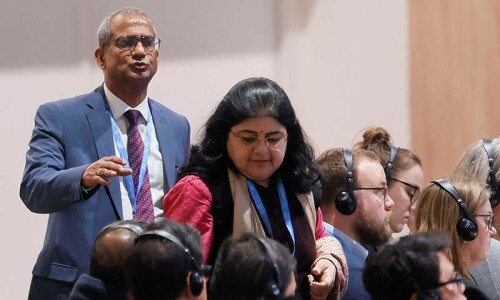
An Afghan environment official on Sunday said the country must be allowed to participate in future global climate talks, after returning from COP29 in Baku where Taliban officials attended for the first time.
The Afghan delegation was invited as “guests” of the Azerbaijani hosts, not as a party directly involved in the negotiations.
It was the first time that an Afghan delegation had attended since the Taliban swept to power in August 2021, having failed to get an invite to the past two COPs (Conference of the Parties) held in Egypt and the United Arab Emirates.
“Afghanistan must participate in such conferences in the future,” said Matiul Haq Khalis, the director general of Afghanistan’s National Environmental Protection Agency, at a press conference on Sunday. He described Afghanistan’s attendance last month at the talks as a “big achievement”.
“We participated in the conference this year so that we could raise the voice of the nation about the issues we are facing, what the needs of the people are, we must share these things with the world.”
He said the Afghan delegation had meetings with “19 different organisations and governments”, including with delegations from Russia, Qatar, Azerbaijan and Bangladesh.
Afghanistan is among the countries most vulnerable to global warming, despite minimal emissions, and the Taliban government have argued that their political isolation should not bar them from international climate talks.
The government has imposed an austere version of Islamic law since taking power, severely restricting women’s participation in public life in what the United Nations has called a “gender apartheid”.
Among the poorest countries in the world after decades of war, Afghanistan is particularly exposed to the effects of climate change, which scientists say is spurring extreme weather including prolonged drought, frequent floods, and declining agricultural productivity.
The United Nations has also called for action to help Afghanistan build resilience and for the country’s participation in international talks.
Developed countries have committed to providing $100 billion per year in climate finance through 2025 to help developing nations prepare for worsening climate impacts and wean their economies off fossil fuels.