COP29 president blames rich nations for ‘imperfect’ deal


PARIS: The tough-fought finance deal at UN climate negotiations was “imperfect”, the Azerbaijan COP29 leadership has admitted, seeking to blame richer countries for an outcome slammed by poorer nations as insulting.
The contentious deal agreed on Sunday saw wealthy polluters agree to a $300 billion a year pledge to help developing countries reduce emissions and prepare for the increasingly dangerous impacts of a warming world.
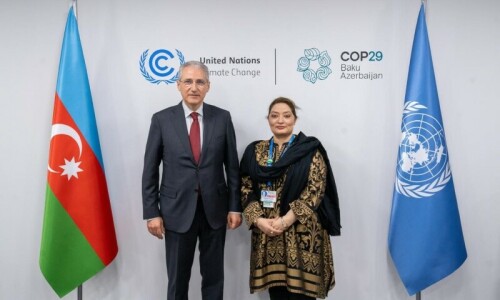
COP29 president Mukhtar Babayev conceded that the deal was insufficient to meet escalating needs and suggested that China would have agreed to stump up more cash had others agreed to budge.
Writing in Britain’s Guardian newspaper on Monday, he said wealthy historical emitters had been “immovable” until very late in the negotiating process.
Babayev regrets ‘wealthy historical emitters’ were unyielding until late in talks
“This deal may be imperfect. It does not keep everyone happy. But it is a major step forward from the $100 billion pledged in Paris back in 2015,” he said.
“It is also the deal that almost didn’t happen.”
Azerbaijan, an authoritarian oil and gas exporter, came under heavy criticism for its handling of COP29, notably France and Germany.
Babayev banged the deal through in the early hours of Sunday after nearly two weeks of fractious negotiations that at one point appeared on the verge of collapse.
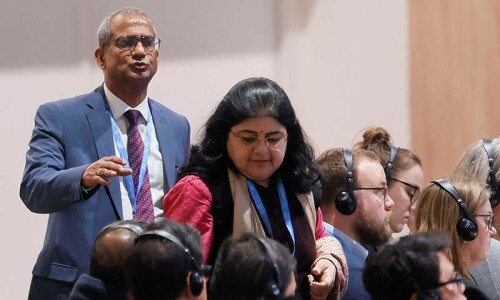
As soon as the deal was approved, India, Bolivia, Nigeria and Malawi, speaking on behalf of the 45-strong Least Developed Countries group, took to the floor to denounce it.
Finance was always going to be a thorny issue for the nearly 200 nations that gathered in a sports stadium in Baku to hammer out a new target by 2035.
Wealthy countries failed to meet the previous goal on time, causing cratering trust in the UN climate process.
COP29 did set out a wider target of $1.3 trillion per year by 2035 to help developing nations pay for the energy transition and brace themselves for worsening climate impacts.
The deal envisages that $300 billion mobilised by wealthy nations will be combined with funds from the private sector and financial institutions like the World Bank to reach this larger sum.
But Babayev said he agreed with developing nations that “the industrialised world’s contribution was too low and that the private sector contribution was too theoretical”.
Contrasting China’s involvement in the negotiations with that of wealthy historical emitters like the European Union and United States, he said Beijing was “willing to offer more if others did so too (but the others didn’t)”.
China, the world’s second-biggest economy and top emitter of greenhouse gases, is considered a developing country in the UN process and is therefore not obliged to pay up, although it does already provide climate funding on its own terms.
The new text states that developed nations would be “taking the lead” but implies that others could join.
Babayev said the deal was “not enough”, but would provide a foundation to build on in the lead up to next year’s climate talks in Brazil.
Published in Dawn, November 27th, 2024