WITH terrorist attacks surging, resulting in high casualties amongst both civilians and security personnel, it is time the state adapted its posture accordingly.
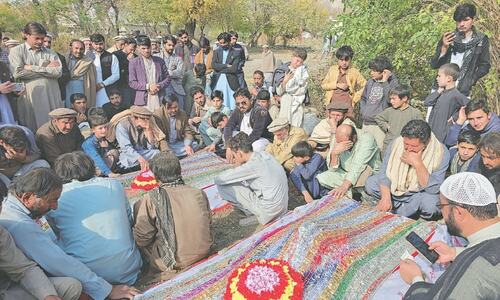
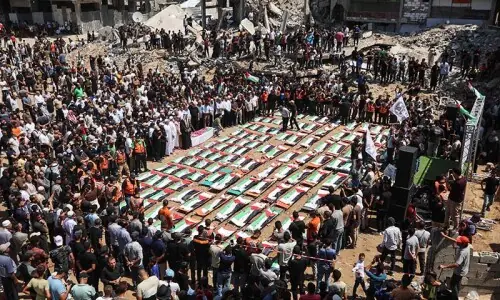
KP is at the centre of the militancy storm, though Balochistan has also experienced a significant upsurge in terrorist violence. Thursday’s reprehensible attack in Lower Kurram targeting a convoy, in which over 40 people were murdered, along with the loss of 12 security personnel in Bannu earlier, are the latest examples of the challenges confronting the state on the counterterrorism front.
In this regard, the Foreign Office has reiterated the need for the Afghan Taliban to take action against militants on their soil while domestically, a multiparty conference has been called to discuss the security situation in KP. A grand jirga is also due to be held to defuse the situation in Kurram after the massacre.
Pakistan has long argued that militants are finding shelter in Taliban-controlled Afghanistan. Indeed, the best efforts of its security forces will be neutralised if terrorists are able to find refuge in Afghanistan. That is why it is crucial for the state to regularly convey its concerns regarding terrorist sanctuaries to Kabul. It is also essential to calibrate our response with regional states, whose security is also affected by violent actors in Afghanistan.
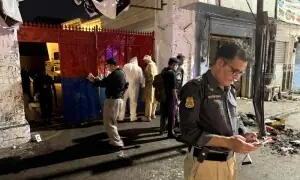
Officials from China and Russia were in Islamabad recently to discuss this issue, and this coordinated approach to regional security must continue if the terrorist threat is to be eradicated. Domestically, it is important that terrorists are denied sanctuary. The Kurram atrocity, the constant attacks on our troops, as well as the Quetta railway station bombing two weeks ago all point to lacunae in our CT efforts, which need to be plugged quickly.
In fact, the number of security personnel — belonging to both the military and police — targeted by terrorists is disturbingly high, particularly for peacetime. Though official figures for the current year are not yet available, one estimate says that in 35 terrorist attacks in KP in October, 40 security men were martyred.
Meanwhile, while addressing a presser in early September, the ISPR chief had said that the army had lost 193 men “fighting terrorists”. If all the numbers are added up, it would mean that Pakistan has lost hundreds of security men this year so far.
As this paper has previously suggested, specialised CT units should be formed within the military, paramilitaries, and police forces. Terrorists tend to use asymmetrical methods to target the state, and security forces need to study these methods to counter violent actors, as traditional tactics are not getting the desired results. If need be, experts from friendly countries can be consulted to train specialised units in the latest CT strategies, and bring down troop losses.
Published in Dawn, November 23rd, 2024