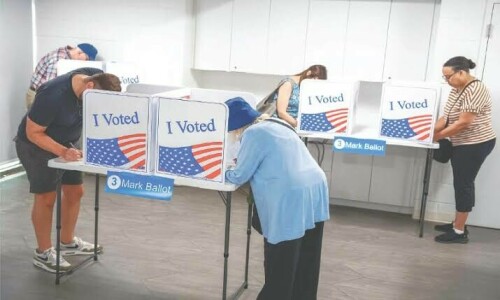
Facing a results vacuum that could grind on for weeks, US TV networks are preparing to fill the airwaves against a backdrop of unprecedented pressure to avoid mistakes and a torrent of disinformation.
In 2020, it took four tense days for President Joe Biden’s victory to be announced.
This year, experts and observers will once again be waiting for the jigsaw puzzle of states to be declared for the Democrats or the Republicans one by one, and with them their electoral college votes, 270 of which are needed to win.
“It’s all going to come down to seven really competitive swing states, and in a lot of those states, we’re not going to have sufficient data to make a projection until either late that evening, early the next day, or in some cases, it might be days after the election,” said Joe Lenski, executive vice president of Edison Research.
His organisation will produce exit polls, projections and vote counts for the ABC, CBS, NBC News and CNN networks.
In addition to a complex electoral system, the voting and counting procedures differ between regions.
Lenski points to Wisconsin and Pennsylvania, two key swing states, that do not start counting early votes until Election Day on November 5.
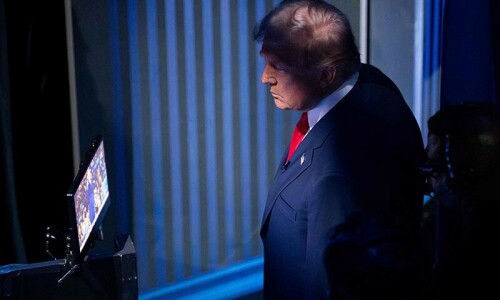
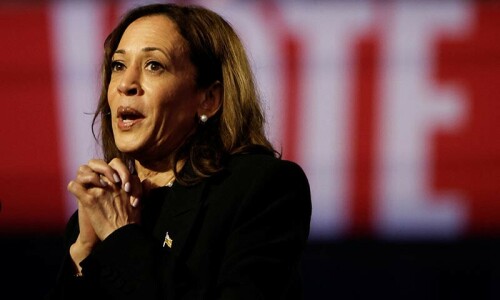
With no official results for weeks, it falls to the TV news networks to call states for either former president Donald Trump or Vice President Kamala Harris.
Behind the swish TV studios, the real pressure will not be on presenters and pundits, but on the network decision desks, teams of statisticians and analysts who will feed anchors with estimates based on the patchy first results.
‘Tremendous pressure’
“The stakes are very high […] there is tremendous pressure to capture viewers by giving them information as quickly as it is available, but the greatest risk is sacrificing accuracy for speed,” said Costas Panagopoulos, a political science professor at Northeastern University and former member of the NBC decision desk.
On November 3, 2020, just a few hours after the polls closed, America’s most popular conservative channel Fox News struck a body blow to Trump’s chances by calling Arizona for Biden.
The announcement, confirmed several days later by other media, infuriated the Trump camp.
Maybe most notorious was the U-turn networks made in 2000 after Florida was prematurely called for Democratic contender Al Gore.
To avoid a repeat of the credibility-damaging episode, media are relying on more advanced analytics that will use not just exit polls but also surveys of early voters.
‘Political posturing’
Election lawyer Ben Ginsberg said he expected the “red mirage” of 2020, the apparent Republican lead that ebbed away as mail-in ballots popular with Democrats were added to tallies.
“(What’s) still unclear is whether a Republican push this year to have their voters cast ballots early will change this pattern,” Ginsberg added in an editorial in The New York Times.
During the marathon race to a result, channels will battle to keep their audiences while trying to uphold accuracy and transparency against an expected tidal wave of disinformation about alleged electoral fraud.
CNN will reprise its “magic wall,” allowing its chief national correspondent John King to display trends visually, showing off his encyclopedic knowledge of past votes.
NBC News has published several articles explaining in detail how data will be collated from more than 100,000 polling stations from November 5 onwards.
They have also detailed the precautions that will be taken to accurately project the results of 610 polls, including elections to the Senate and the House of Representatives.
“The amount of data that our partner news organisations provide their viewers […] is more data than (has) ever been provided before. There’s more detail, there’s more maps, there’s more analysis than ever,” said Lenski.
“Delays themselves are not evidence of a conspiracy,” Ginsberg wrote in his column.
“If either candidate jumps the gun and declares victory before the votes are counted, dismiss it as political posturing.”