TEHRAN: Iran’s government has proposed tripling its military spending, an official said on Tuesday, as tensions with arch-rival Israel rise following recent tit-for-tat missile strikes.
Government spokeswoman Fatemeh Mohajerani outlined the move that would see “a significant increase of more than 200 per cent in the country’s military budget” at a news conference in Tehran, without elaborating.
Tehran has not disclosed any exact figures, but according to the Stockholm International Peace Research Institute (SIPRI) think tank, Iran’s military spending in 2023 was about $10.3 billion. The proposed budget will be debated, with lawmakers expected to finalise it in March.
“All efforts have been made to meet the country’s defence needs and special attention has been paid to this issue,” said Mohajerani.
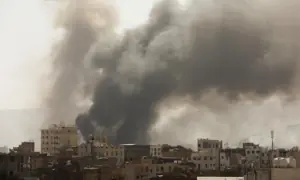
The plan came days after Israel carried out air strikes on military sites in Iran in response to Tehran’s Oct 1 attack, itself retaliation for the killing of leaders and a Revolutionary Guards commander. At least four soldiers were killed in the Israeli strikes, according to Iran’s military, and Iranian media reported on Monday that a civilian was also killed in the attack.
Afterwards, Israeli Defence Minister Yoav Gallant said his country’s strikes had shifted the balance of power between the sworn enemies. “The enemy has been weakened — both in its ability to produce missiles and in its ability to defend itself. This changes the balance of power,” Gallant said in a statement.
Shadow war
Iran’s attack on Oct 1, when it said it fired 200 projectiles at Israel, was its second-ever direct attack on its arch-enemy. Israel said most of the missiles were intercepted but one person was killed.
The Islamic republic conducted its first direct attack on Israel in mid-April, in response to a suspected Israeli strike on Iran’s consulate in the Syrian capital Damascus that killed seven Revolutionary Guards, including two generals. The tit-for-tat moves unfold amid Israel’s ongoing conflict with Hamas, which has expanded in recent weeks to include Hezbollah.
Published in Dawn, October 30th, 2024