ISLAMABAD: Another wild polio case has been found in the country taking the tally for the current year to 33.
According to an official of the Regional Reference Laboratory for Polio Eradication at the National Institute of Health Islamabad, the wild poliovirus type-1 case has been found in Quetta district of Balochistan.
“This is the third polio case in Quetta district and 33rd in the country this year. So far, 17 cases have been reported from Balochistan, 10 from Sindh, four from Khyber Pakhtunkhwa, and one each from Punjab and Islamabad,” he said.
“Genetic sequencing has been linked 99.66 per cent with environmental sample of Quetta collected on April 23 this year. Environmental samples from Quetta district and Quetta block have been consistently positive for WPV1 this year, indicating continued circulation of the virus and risk to children.”
“This year, 37 positive environmental samples and three cases have been found in Quetta, while Quetta block has reported 65 positive environmental samples and 11 cases,” he said.
Balochistan health minister points out low immunisation coverage
“The implementation of polio campaigns in this region was challenging last year. Campaigns were staggered or postponed due to protests, boycotts and insecurity, leading to a cohort of missed children. This outbreak is indicative of the harm children suffer due to missed vaccination opportunities,” the official added.
Polio eradication not possible without improving coverage
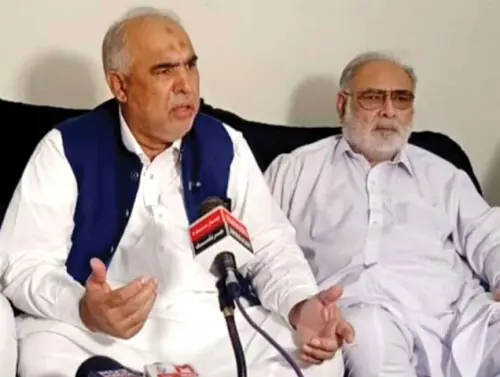
Meanwhile, Balochistan Minister for Health Bakht Muhammad Kakar has said that achieving a polio-free status with only 37pc routine immunisation coverage is very challenging, and without improving this coverage, polio cannot be eradicated from the province.
Speaking at the conclusion session of a one-day training workshop for all district health officers at the IT University here on Monday, Mr Kakar said that health issues, particularly polio, are significant problems in the province.
The minister questioned how improvement can be expected if a new health system is not introduced in the province.
“Everyone must work together to fix this system, as no one from outside will come to do it for us,” he said.
He said that rural health centers in Quetta are not functioning and that teams of experts are needed to improve the health system.
Mr Kakar admitted that vaccination statistics have reached a dangerously low level in the province which requires collective efforts to improve the situation.
He said a new system for distribution of medicines in hospitals is being introduced. If basic health units and rural health centres are outsourced, positive results can be achieved, he said.
Saleem Shahid in Quetta also contributed to this report
Published in Dawn, October 15th, 2024