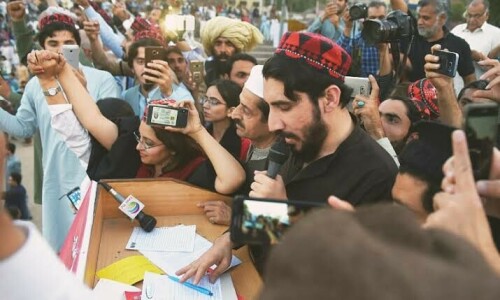
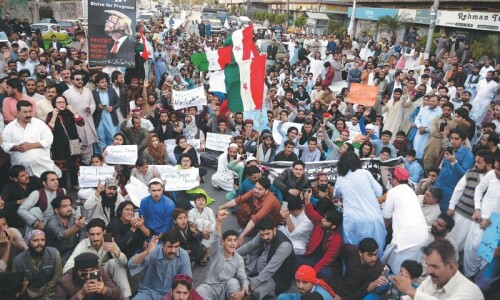
A FRESH stand-off is brewing between the state, and the recently banned PTM, principally over the tribal jirga that had been planned for today by the latter in KP. Both the centre and the KP government have made it clear that the outfit cannot proceed with the gathering, while there have been violent clashes between PTM supporters and law enforcers, with the group saying that three of its activists have been killed.
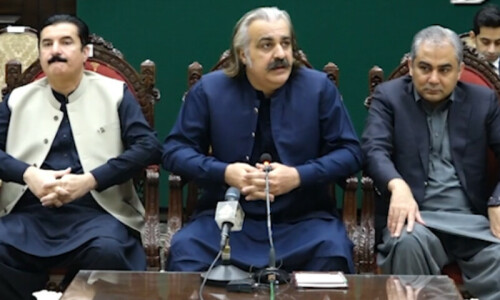
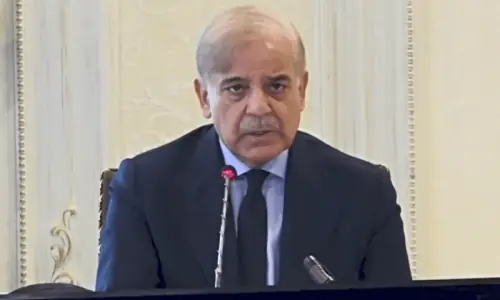
Moreover, the interior minister held a presser on Wednesday offering a few carrots — but mostly sticks — to the PTM. Mohsin Naqvi said that talks could be held in a “proper manner”, but that the state would not tolerate incitement against institutions. While it is hoped that a peaceful resolution to this impasse is found, the state must ask itself why such movements emerge in the first place, and what mistakes made by successive rulers aggravate the situation in what is sometimes referred to as the country’s ‘peripheries’.
Looking at KP and the former Fata region, from where the PTM gathers most of its support, this part of Pakistan — especially areas close to the Afghan border — have experienced violence, displacement, and militancy ever since the ‘war on terror’ arrived in this region over two decades ago. Moreover, lack of development, and claims of state excesses, have added fuel to the fires of discontent.
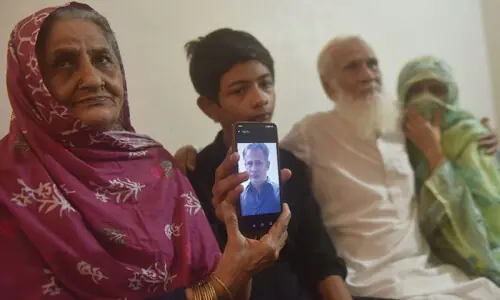
It is these factors, amongst others, which led to the rise of the PTM. Similar factors are responsible for the popularity of groups such as the Baloch Yakjehti Committee in Balochistan. In fact, many of the BYC’s grievances mirror those of the PTM. Baloch activists have for years been calling for the state to deliver to them their constitutional rights, particularly when it comes to the issue of enforced disappearances. But it is not just the peripheries that are in tumult.
The PTI’s protest campaign — which finds most resonance in Punjab and urban KP — can be traced to the state’s efforts to cancel the party and cut its leadership down to size.
Instead of considering all these and other critical voices as threats, the state needs to treat them as opportunities, hear out the disaffected populations, and find a democratic way forward. Yet it must be said that all movements and political parties must remain peaceful and respect the law; while legitimate criticism of state institutions is kosher, incitement to violence or rebellion against organs of the state can simply not be condoned.
Meanwhile, the state should engage with critical voices, and refrain from forcibly silencing them, as this opens the door to radicalisation, militancy, and separatist sentiments. For the sake of national harmony, disaffected groups both in the peripheries and the mainstream must be engaged in a spirit of conciliation and respect to prevent further divisions.
Published in Dawn, October 11th, 2024