KARACHI: Educationists and rights activists have said that extremism and religious intolerance are rising in the country, and it is necessary to take steps to control this menace.
They expressed these concerns during a panel discussion held after the screening of a documentary film about forced conversions in Pakistan.
The screening of the documentary, titled Neighbour—Hum Saya, followed by the panel discussion, was organised by the Centre for Social Justice in collaboration with SZABIST University at its campus here on Wednesday.
The film portrayed stories of forced conversions in Pakistan, including the case of an underage Christian girl from Lahore. She was kidnapped by a man who forcibly converted her to Islam and married her.
SZABIST organises screening of documentary on forced conversions
The girl’s father, a sanitary worker, approached the police, but instead of helping him, the officials humiliated him, calling him ‘Gutter Cleaner’ and ‘Sweeper,’ and refused to lodge an FIR. However, one of his Muslim neighbours, upon witnessing the injustice, came forward to help him fight his case. Ultimately, they approached the court and were able to get an FIR registered by the police. Following this, the kidnapper was forced to return the minor girl.
The documentary, apart from highlighting the injustices faced by minorities in the country, also showed the crucial role fellow citizens, especially neighbours, can play in helping one another.
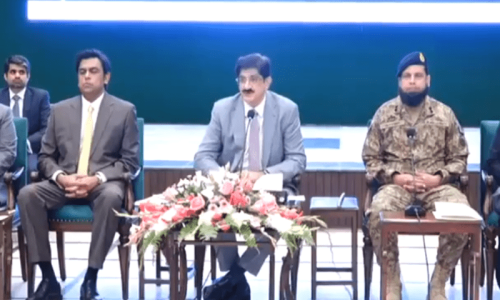
Following the documentary, a panel discussion was held, with representatives of religious minorities and rights activists participating.
Speaking on the occasion, SZABIST’s dean faculty of Social Sciences Dr Riaz Shaikh expressed concern over the increasing extremism in society and the cases of people being killed on charges of blasphemy.
He said religious intolerance is rising in Pakistan and referred to a recent incident in Umerkot, where a doctor was killed in a staged encounter by the police.
He mentioned that the victim, Dr Shahnawaz Kunbhar, was killed based on bogus blasphemy accusations.
He further emphasised that the most negative role was played by law enforcers, who, instead of upholding the law, became accomplices to the criminals and took the law into their own hands. He stressed that this rising extremism and intolerance need to be controlled.
Educationist Nasima Zahid of Aga Khan University said that hate content promoting religious extremism is increasing in the country’s curricula, leading to such incidents. She called for the removal of such hateful content from syllabi and advocated for the promotion of inclusiveness and tolerance.
Representing Hindu Panchayat, Dr Jaipal pointed out the discrimination faced by minorities in the country’s political system, where they are kept away from higher government positions. He demanded an end to this discrimination.
Dr Anita Panjani from the Women’s Action Forum discussed the victimisation of the Hindu community, especially businessmen. She said the Hindu business class is being systematically targeted in Upper Sindh, facing harassment and ransom demands aimed at displacing them.
William Sadiq from the Centre for Social Justice also spoke at the event, which was moderated by Imran Alam.
Published in Dawn, October 3rd, 2024