Julian Assange says he chose freedom over justice



STRASBOURG: Julian Assange, the founder of whistleblower media group WikiLeaks, told European lawmakers on Tuesday his guilty plea to US espionage accusations was necessary because legal and political efforts to protect his freedom were not sufficient.
“I eventually chose freedom over an unrealisable justice,” Assange said, in his first public comments since his release from prison, addressing a committee at the Council of Europe, the international body best known for its human rights convention.
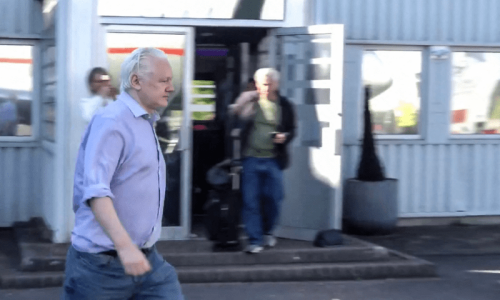
Assange, 53, returned to his home country Australia in June after a deal was struck for his release which saw him plead guilty to violating US espionage law, ending a 14-year British legal odyssey.
“I am free today after years of incarceration because I pleaded guilty to journalism, pleaded guilty to seeking information from a source, I pleaded guilty to obtaining information from a source and I pleaded guilty to informing the public what that information was,” he said.
In first comments following detention, WikiLeaks founder tells European lawmakers he ‘pleaded guilty to journalism’
WikiLeaks in 2010 released hundreds of thousands of classified US military documents on Washington’s wars in Afghanistan and Iraq — the largest security breaches of their kind in US military history — along with swaths of diplomatic cables.
Assange was indicted years later under the Espionage Act.
A report by the Parliamentary Assembly of the Council of Europe concluded Assange was a political prisoner and called for Britain to hold an inquiry into whether he had been exposed to inhuman treatment.
Dressed in a black suit with a burgundy tie and a slight white beard, Assange sat between his wife Stella, and WikiLeaks’ editor Kristinn Hrafnsson, reading out his initial remarks from sheets of paper.
“I am yet not fully equipped to speak about what I have endured,” he said, adding: “Isolation has taken its toll which I am trying to unwind.”
Speaking freely during a subsequent question and answer session, Assange looked moved when he told lawmakers the plea deal meant he would be barred from ever bringing a case to defend himself against the US’s spying accusations.
“There will never be a hearing into what happened,” he said.
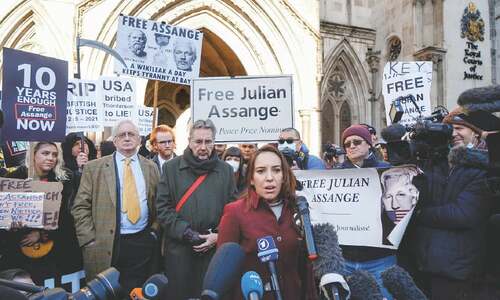
His wife, whom he married while in a London jail, said last month he would need time to regain his health and sanity after his long incarceration.
Asked about his plans, Assange said the Strasbourg hearing, aimed at raising awareness of the need to protect whistleblowers and informers was “a first step”.
Adapting to normal life after years of imprisonment included some “tricky things”, he said, like learning to be a father for two children who grew up without him and “becoming a husband again, including with a mother-in-law,” drawing some laughter from the crowd.
Assange was first arrested in Britain in 2010 on a European arrest warrant after Swedish authorities said they wanted to question him over sex-crime allegations that were later dropped.
He fled to Ecuador’s embassy, where he remained for seven years, to avoid extradition to Sweden.
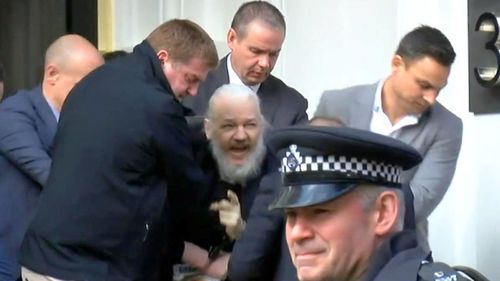
He was dragged out of the embassy in 2019 and transferred to London’s Belmarsh top security jail for skipping bail.
Published in Dawn, October 2nd, 2024