WikiLeaks founder Julian Assange freed in US plea deal



Julian Assange was on his way home to Australia as a free man on Wednesday after a plea deal ended years of legal drama for the WikiLeaks founder, who had long been wanted for revealing US state secrets.
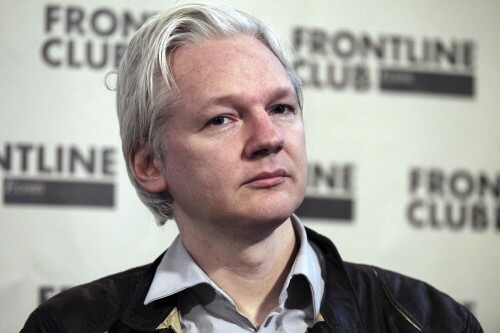
Assange, who from 2010 published hundreds of thousands of confidential US documents on the whistleblowing website, was released this week from a high-security British prison.
The 52-year-old travelled to the Northern Mariana Islands, a Pacific US territory, to plead guilty to a single count of conspiracy to obtain and disseminate national defence information.
He was sentenced Wednesday to five years and two months in prison — but credited for the same amount of time he spent behind bars in Britain while fighting extradition to the United States.
“You will be able to walk out of this courtroom a free man,” the judge told Assange, adding she hoped the deal would restore some “peace” to him after his incarceration.
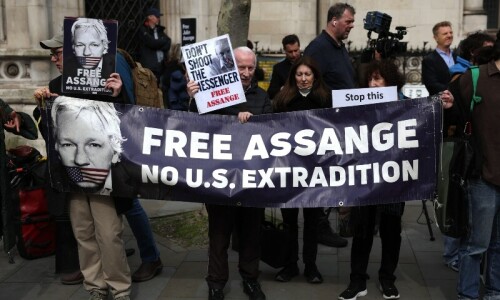
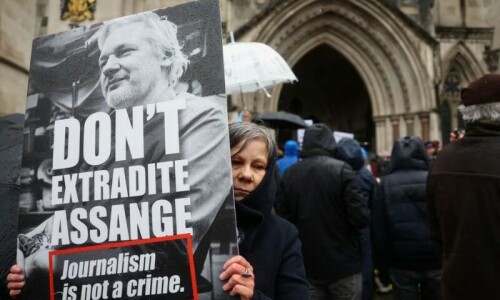
Assange has become a hero to free speech campaigners and a villain to those who thought he had endangered US security and intelligence sources.
“Working as a journalist, I encouraged my source to provide material that was said to be classified,” Assange, dressed in a black suit with a brown tie and his hair slicked back, told the court.
But he did not address the media as he left the building, and his plane took off shortly after for Canberra, where he will be reunited with his family.
His lawyer Jen Robinson told reporters it was a “historic day” that “brings to an end 14 years of legal battles”.
“It also brings to an end a case which has been recognised as the greatest threat to the First Amendment in the 21st century,” she said.
Case ‘dragged on’
Looking tired but relaxed during the proceedings, Assange shared a brief laugh with Kevin Rudd, Australia’s ambassador to the United States.
Journalists and curious locals, several in colourful Hawaiian shirts, packed the small courtroom. One Saipan resident told AFP he had come to “see the main event”.
The Northern Mariana Islands was chosen for the hearing because of Assange’s unwillingness to go to the continental United States and because of its proximity to Australia.
Australian Prime Minister Anthony Albanese called the plea deal a “welcome development”.
His government earlier said Assange’s case had “dragged on for too long” with “nothing to be gained by his continued incarceration”.
The United Nations also hailed Assange’s release, saying the case had raised human rights concerns.
But former US vice president Mike Pence slammed the plea deal on social media platform X as a “miscarriage of justice” that “dishonours the service and sacrifice of the men and women of our armed forces”.
The US justice department said after the hearing that Assange was banned from returning there without permission.
‘Can’t stop crying’
US authorities had wanted to put Assange on trial for divulging military secrets about the wars in Iraq and Afghanistan.
He was indicted by a US federal grand jury in 2019 on 18 counts stemming from WikiLeaks’ publication of a trove of national security documents.
The material he released through WikiLeaks included a video showing civilians being killed by fire from a US helicopter gunship in Iraq in 2007. The victims included a photographer and a driver from Reuters.
In 2019, he was arrested and held in London’s Belmarsh prison after spending seven years in Ecuador’s embassy in the UK capital to avoid extradition to Sweden, where he faced accusations of sexual assault that were eventually dropped.
He met his wife Stella Assange while holed up in the embassy, and the pair married in a ceremony in London’s Belmarsh prison. They have two young children.
“I can’t stop crying,” Stella, who will be waiting for him in Australia, said on X.
The announcement of the plea deal came two weeks before Assange was scheduled to appear in court in Britain to appeal against a ruling that approved his extradition to the United States.
Washington had accused Assange under the 1917 Espionage Act and supporters warned he risked being sentenced to 175 years in prison.
The plea deal was not entirely unexpected. US President Joe Biden had been under growing pressure to drop the long-running case against Assange.
The Australian government made an official request to that effect in February and Biden said he would consider it, raising hopes among Assange supporters that his ordeal might end.