AS the nation confronts a major militancy problem in the midst of poor ties with Kabul, there is a dire need to revisit Pakistan’s Afghanistan policy.
A major sign that things are awry where the Afghan file is concerned emerged in the shape of the recent resignation of Asif Durrani, Pakistan’s special representative on Afghanistan. Mr Durrani was reporting to the military, yet there was seemingly some discord over how to handle the Afghan file, as the powers that be were supposedly unhappy with his performance, and Mr Durrani might have been perturbed by the fact that his advice was not being heeded.
Among the points of contention was the mass expulsion of Afghans; Mr Durrani was not in favour of this. He also thought that Pakistan needed to focus on managing terrorism domestically, as the Afghan Taliban were unlikely to cut their ties with the banned TTP.
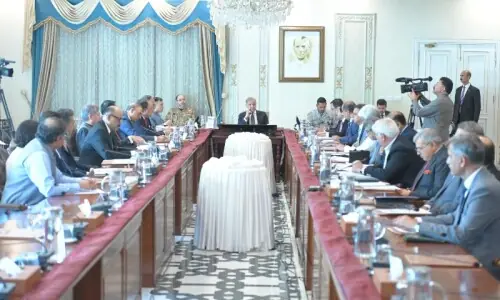
Along with Mr Durrani’s resignation, there was also an uproar over KP Chief Minister Ali Amin Gandapur’s stated intent to hold direct talks with the Afghan Taliban. It should be remembered that the conduct of foreign relations is the centre’s domain. The provinces must give their input, but bypassing the centre is an unsound course of action.
Ever since the Taliban takeover of Kabul, Pakistan has struggled to come up with a coherent Afghan policy that sufficiently addresses its concerns about terrorism, and at the same time outlines a roadmap to improve ties with Afghanistan. Pak-Afghan ties should not be seen solely from the security and militancy lens; there are many other factors affecting this relationship, including economics, geopolitics and humanitarian concerns.
A wider debate is needed to frame a workable Afghan policy, and no particular state institution should have the sole discretion to formulate and execute this policy. There needs to be input from parliament, the Foreign Office and area experts. A fresh approach is needed, where Pakistan’s security is prioritised, and a decision taken to improve ties with Kabul. Of course, the Afghan Taliban also need to respond in kind; the biggest confidence-building measure can come in the form of Kabul ensuring an end to cross-border terrorism.
Moreover, the concerns raised by Mr Durrani cannot be brushed aside, particularly where humane repatriation of Afghans is concerned; neither can the need for Pakistan to prevent militants from ensconcing themselves on our soil.
Published in Dawn, September 17th, 2024