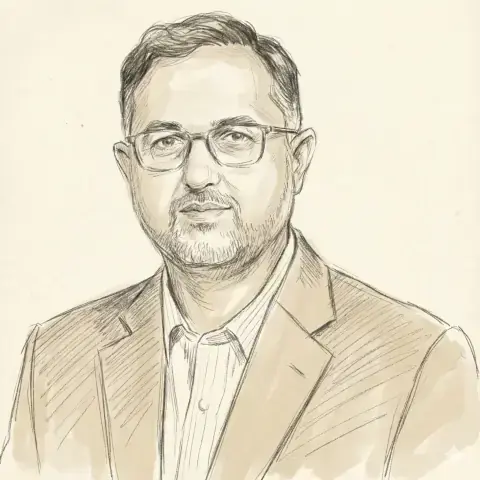
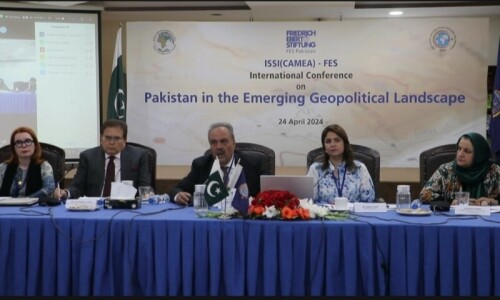
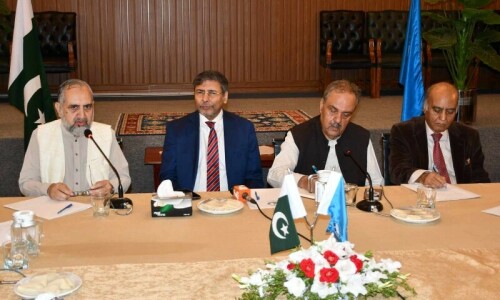
ISLAMABAD: Ambassador Asif Durrani, Special Representative on Afghanistan, has been removed from his position due to differences over Afghanistan policy, a diplomatic source revealed on Friday.
According to an official notification, shared with Dawn, Durrani was relieved of his duties last Tuesday.
Separately, in a text message, Durrani confirmed his departure, expressing gratitude to the leadership for allowing him to serve Pakistan.
The special envoy for Afghanistan, a position created in June 2020 after the US-Taliban Doha Accord, reported to the military and engaged with the Taliban and other countries involved in Afghanistan.
While the military was unhappy with his performance, Durrani, too, had grown increasingly frustrated as his policy advice was regularly ignored by his principals. He had shared his concerns with some of his recent visitors.
Moreover, despite his 32-year diplomatic career, he was seen as an outsider in the Foreign Office due to his unique assignment, which required him to report to and take directions from the military. He, therefore, felt excluded from Afghanistan-related discussions within the Foreign Ministry.
Durrani was appointed in May 2023 with the expectation that he would resolve the stalemate in Islamabad-Kabul relations, particularly regarding TTP sanctuaries in Afghanistan. Despite initiatives and goodwill gestures, the deadlock persisted.
There has been a significant spike in TTP attacks since Taliban came to power in Afghanistan in August 2021 and especially after the failure of the negotiations with TTP, brokered by the Taliban.
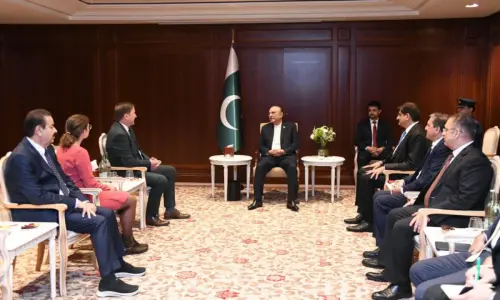
In July, Durrani met a Taliban delegation led by Zabihullah Mujahid in Doha. The meeting was described as positive by the Taliban.
Though Durrani advocated for a ‘one document’ regime for Afghan visitors, he opposed mass deportations of undocumented Afghans, arguing it would reflect badly on Pakistan’s border controls and harden the Afghan Taliban’s stance. He suggested a low-key approach to addressing the issue of illegal Afghans.
He believed Pakistan needed to manage its terrorism problem domestically, as the issue was likely to persist for foreseeable future due to Taliban not changing their position on ties with TTP, their ideological cousins.
However, strict military oversight of his role severely limited his diplomatic flexibility, leaving him with scant room to maneuver in negotiations with the Taliban.
His predecessor, Mohammad Sadiq, had also resigned from the position.
Published in Dawn, September 14th, 2024