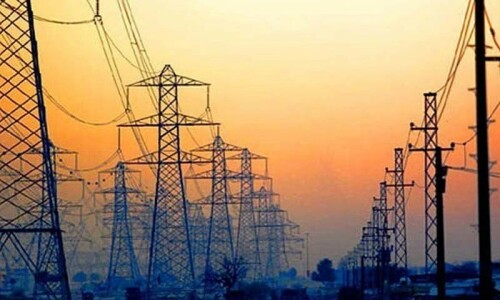
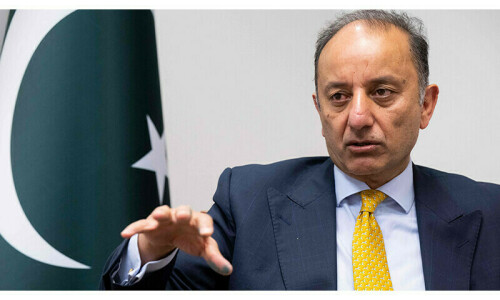
The government is renegotiating contracts with independent power producers (IPP) to rein in “unsustainable” electricity tariffs, said Power Minister Awais Leghari, as households and businesses buckle under soaring energy costs.
Rising power tariffs have stirred social unrest and shuttered industries in the $350 billion economy, which has contracted twice in recent years as inflation hit record highs.
“The existing price structure of power in this country is not sustainable,” Leghari told Reuters in an interview on Friday.
He said discussions were underway between power producers and the government because “there is a clear understanding on both sides that the status quo can’t be maintained”.
Leghari stressed that all stakeholders would have to “give in to a certain point” — though without compromising completely on business sustainability — and this would have to be done “as soon as possible”.
Faced with chronic shortages a decade ago, dozens of private projects by IPPs were approved, financed mostly by foreign lenders. The incentivised deals included high guaranteed returns and commitments to even pay for unused power.
However, a sustained economic crisis has slashed power consumption, leaving the country with excess capacity that it needs to pay for.
Short of funds, the government has built those fixed costs and capacity payments into consumer bills, sparking protests by domestic users and industrial associations.
Four anonymous sources in the power sector told Reuters that changes to contracts demanded included slashing guaranteed returns, capping dollar rates and moving away from paying for unused power.
On Saturday, local media outlet Business Recorder said in a report citing sources that 24 conditions have been proposed for the transition from a capacity-based model to a take-and-pay model.
However, Leghari told Reuters that no new draft agreements or specific demands had been officially sent to power companies and said the government would not force them to sign new watered-down contracts.
“We would sit and talk to them in a civil and professional manner,” he said, adding that the government has always maintained contractual obligations to investors, both foreign and local.
He said contract revisions would be by “mutual consent”.
Energy sector viability was the focus of a critical staff-level pact in May with the International Monetary Fund (IMF) for a $7bn bailout. The IMF’s staff report stressed the need to revisit power deals.
Talks on reprofiling power sector debt owed to China as well as negotiations on structural reforms had already been initiated but progress has been slow. Pakistan has also committed to stop power sector subsidies.
Leghari said current rates were not affordable for domestic or commercial consumers and this was hurting growth because power prices were no longer regionally competitive, putting critical exports at a disadvantage.
He said the aim was to bring tariffs down to nine US cents per unit for commercial users from about 28 cents currently.