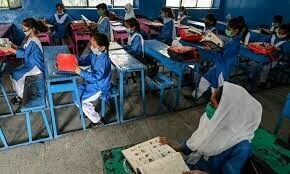
ISLAMABAD: The number of out-of-school children remains at approximately 25 million, which is over one-third of the population of children that belong to the school-going ages (5-16 years).
This was revealed in a report released by the Pak Alliance for Math and Science (Pams) titled ‘The Missing Third of Pakistan’.
It said this new data, based on the Population Census of 2023, is the first out-of-school children report in Pakistan that provides a tehsil-level analysis of these numbers, magnifying disparities that exist within districts and provinces, making it one of the most comprehensive reports on the subject published to date.
“This sub-district analysis should serve as an important tool for policymakers and education managers,” said CEO of PAMS Salman Naveed Khan.
Says worst performing tehsils in Balochistan; Rawalpindi has the lowest percentage of children not going to school
According to data, the majority of the worst-performing tehsils hailed from Balochistan while the top-performing tehsils were in Punjab, with the first four belonging to Rawalpindi.
Kot Mandai in Sibbi district in Balochistan, with 92 per cent of its children out of school, is the worst performing out of 591 tehsils, followed by Toi Khulla in South Waziristan, Khyber Pakhtunkhwa, where at least 91pc of the children were out of school.
The best-performing tehsil was identified as Kahuta, in Rawalpindi, with only 7.66pc of its children out of school followed by Kotli Sattian, which also falls in Rawalpindi with 8.52pc children out of school.
Another important finding reveals that children between the ages of five and nine years are at the highest disadvantage, with 51pc of them not enrolled in school (among the never enrolled children within school-going age).
One of the authors and programme leader at Pams Huma Zia said over 50pc of the children aged 5-9 years were not in school today, threatening Pakistan’s future literacy rates.
“The takeaway is simple: each tehsil and district must have its unique pathway, shaped by the local circumstances and challenges it faces,” she said, adding that if we continue to rely on conventional strategies like enrolment drives without addressing the underlying factors which contribute to high out-of-school children rates, we risk perpetuating the cycle of educational exclusion.
Rather, Ms Zia recommended embracing a data-centric approach and fostering collaboration across all levels of government to innovate education programming in Pakistan to be more impactful.
Published in Dawn, August 30th, 2024