0
0

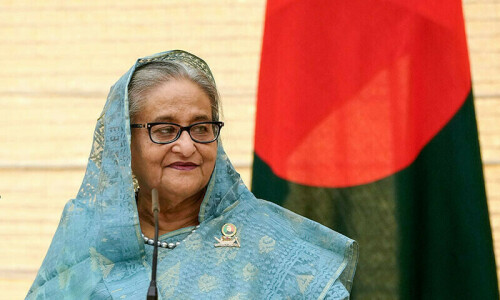
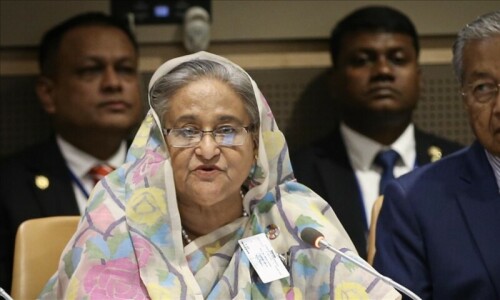
A Bangladeshi war crimes tribunal set up by ousted premier Sheikh Hasina has launched three “mass murder” probes into its founder over the unrest that forced her to flee the country, its investigator said Monday.
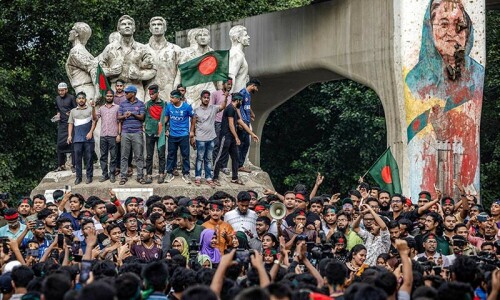
More than 450 people were killed — many due to police fire — during a month of student-led protests against Hasina’s 15-year autocratic rule, before she quit as prime minister and fled to India on August 5.
“We are collecting preliminary evidence at this stage,” said Ataur Rahman, deputy director of the tribunal’s investigation cell, adding the cases were related to “mass murder”.
“After this, we will go to the site of the crimes,” Rahman told AFP.
All three cases were brought by private individuals, and several of Hasina’s former top aides have also been named in the cases, he said.
The cases relate to violence in suburbs or nearby districts of the capital Dhaka, in Mirpur, Munshiganj and Savar.
In addition, local police units across the country have filed at least 15 cases against Hasina, according to local media reports.
Some relate to cases that predate the recent unrest, and charges include murder and “crimes against humanity”.
Bangladesh’s International Crimes Tribunal (ICT) was set up by Hasina in 2010 to probe atrocities during the country’s liberation war against Pakistan.
Under Hasina, the ICT sentenced more than 100 people to death, including several of her political opponents.
The court was often criticised by rights groups for not following international conventions.
Hasina’s government was accused of widespread human rights abuses, including the extrajudicial killing of thousands of her political opponents.
The United Nations said on Friday there were strong indications that the Bangladeshi security forces used unnecessary force in tackling the student-led uprising.
“There are strong indications, warranting further independent investigation, that the security forces used unnecessary and disproportionate force in their response to the situation,” the UN human rights office said in a preliminary report.
“Alleged violations included extrajudicial killings, arbitrary arrests and detention, enforced disappearances, torture and ill-treatment,” it added.
Bangladesh’s interim leader Muhammad Yunus has said his administration would “provide whatever support” the UN investigators need.